Publications
This is but the latest example of how Meta has built a trillion-dollar business using willfully unfair, anticompetitive, deceptive, and unconscionable practices, terms used by judges who have found its practices unfair and illegal.
he Center for Media and Digital Governance at Open Markets joined a coalition letter urging the Australian government to maintain strong copyright protections for creators and journalists amid reports that officials are considering exempting AI companies from copyright obligations when training their models. CMDG warned that weakening these protections would undermine rights holders’ ability to control and negotiate compensation for the use of their work and could set a harmful international precedent.
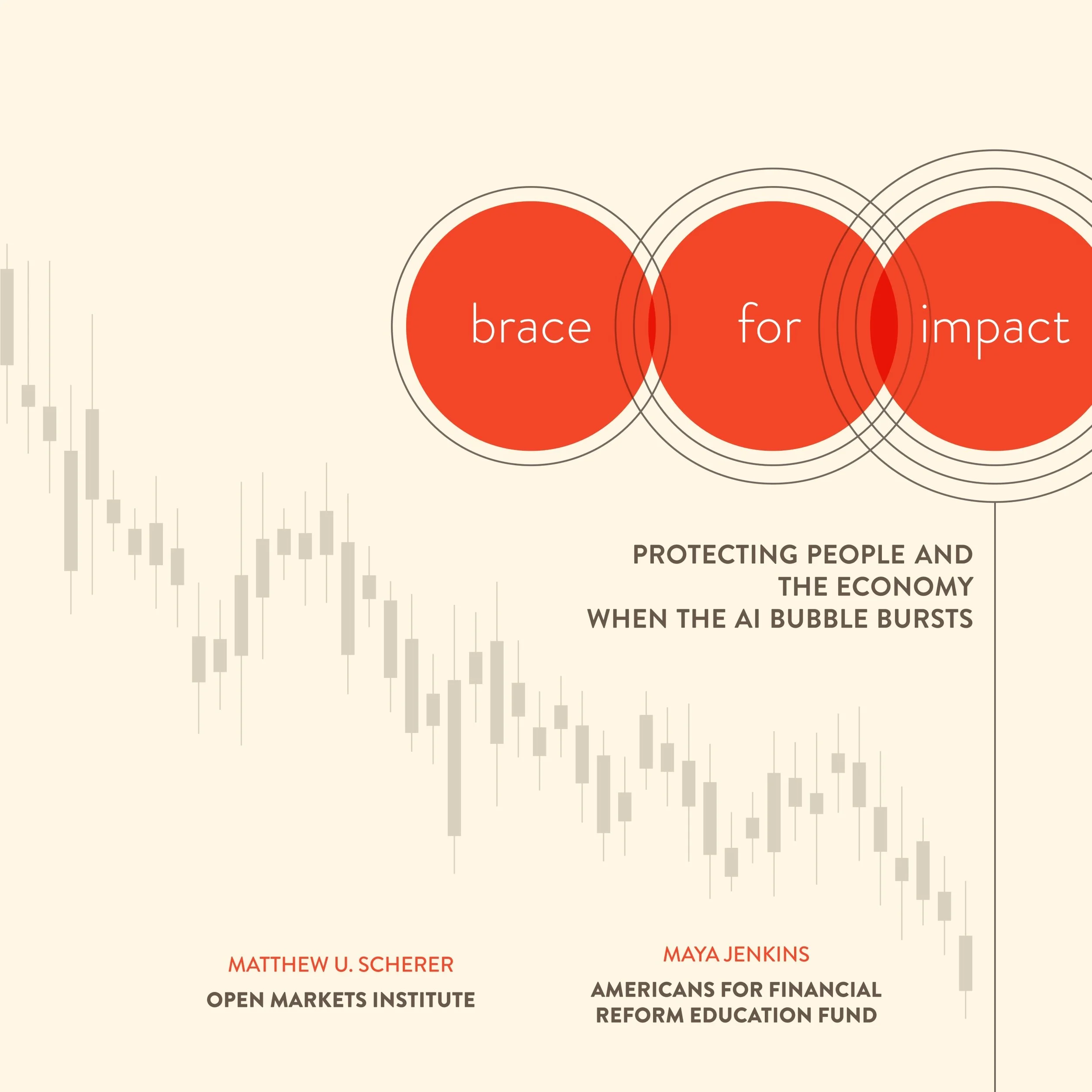
This report with Americans for Financial Reform is an urgent warning: it details how the money pouring into AI could spiral into an economy-wide crisis and lays out recommendations for policymakers on how to keep an AI crash from devastating ordinary people’s finances.
CMDG Director Courtney Radsch warns that the Paramount–Warner Bros. Discovery settlement will deepen media concentration, arguing that stronger antitrust enforcement and policies curbing Big Tech’s control over information markets are needed to protect jobs, plurality, and independent journalism.
In a groundbreaking new legal paper, Sandeep Vaheesan argues that companies that systematically violate laws to undercut rivals are engaging in an unfair method of competition and that the FTC can and should take action. This includes Big AI copyright law violations.
In a comment letter to the FTC, Open Markets Institute urges the Commission to use the full extent of the law to crack down on surveillance-enabled pricing.
Barry Lynn condemned the settlement by a coalition of attorneys general that sued to block Paramount’s takeover of Warner Brothers Discovery.
After finding Google guilty of illegal conduct, this decision is an embarrassing capitulation that essentially lets them determine their own punishment in exchange for a promise not to repeat the behavior.
Barry Lynn released a statement condemning the decision in U.S. v Google, in which U.S. District Court Judge Leonie Brinkema declined to order the breakup of Google’s AdX ad exchange.
CMDG Director, Dr. Courtney Radsch, calls on policymakers and legislators to use this settlement as a minimum floor to pursue more expansive reforms that put an end to harmful platform design for all users.