
Dissent - The Fight Over Affordability
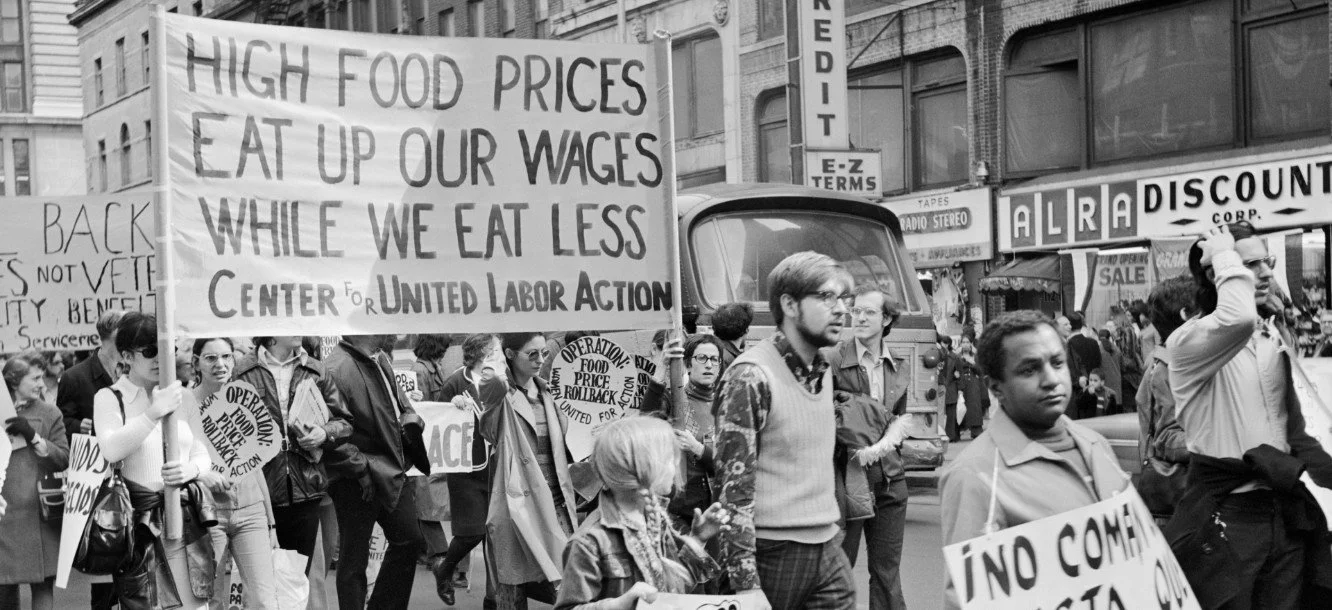
Demonstration against high food prices in New York City in the 1970s (Photo by H. Armstrong Roberts/ClassicStock/Getty Images)
Food systems program manager Claire Kelloway and legal directoy Sandeep Vaheesan argue that America’s affordability crisis is driven by corporate pricing power, not overpaid workers, and call for stronger antitrust enforcement, public investment, and higher wages to rein in concentrated power.
“Affordability” is the primary rallying cry of American politics today, as households struggle with the increasing price of food, housing, and energy. The rising cost of living is not new but has been made worse after years of inflation that began in the wake of the pandemic and hit low-income households hardest, outpacing wage gains for many. While most politicians say that they want to help Americans afford their lives, what really matters is how. Affordability is a malleable term: Its use covers many competing agendas even within political parties, including substantively regressive ones that threaten working people.
As we seek solutions that systematically help all people meet their needs, we can learn from history. When the United States last faced a sustained affordability crisis in the 1970s, important segments of both parties blamed working people and specifically unions for spiraling price increases, initiating a systematic effort to weaken labor power to restore price stability. While inflation cooled by the mid-1980s, the Federal Reserve triggered a deep recession and helped transform the country’s political economy into one more favorable to capital and hostile to working people.
Certain policymakers in the Trump administration and commentators associated with the so-called Abundance movement are again calling for affordability on the backs of workers. But instead of further slashing wages and making work more precarious and unsafe, we must target the oligarchs in the U.S. economy: the executives and financiers who control corporations and raise prices for profit.
Our affordability crisis is not due to pampered workers, but corporate power. Understood in this way, a real affordability agenda unites stronger antitrust and other forms of business regulation, direct public provisioning of necessities, and policies that raise wages.
Read full article here.