Open Markets Submits Testimony in House Judiciary Subcommittee’s Streaming Services Antitrust Hearing
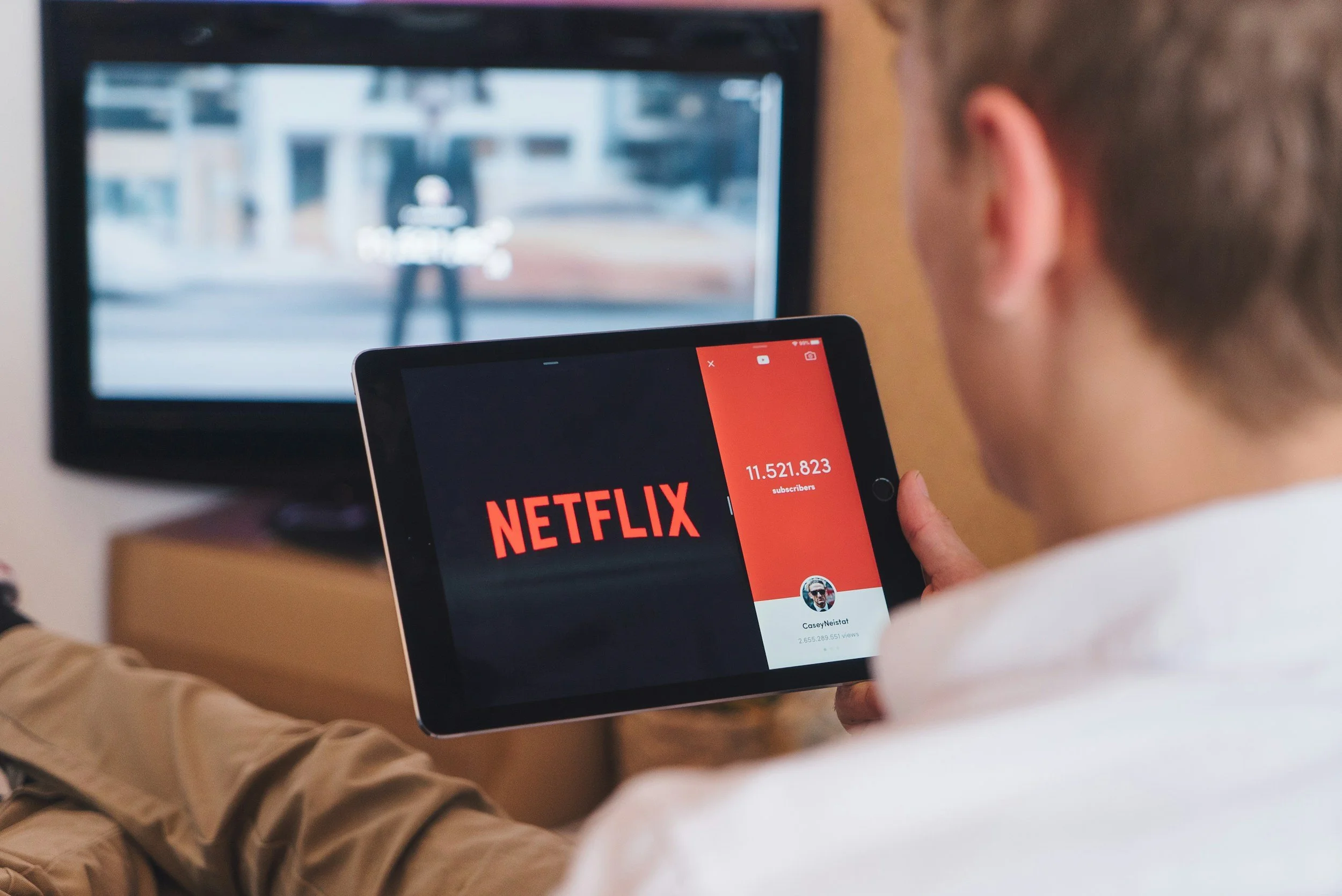
Testimony Warns Media Mega-Mergers – Like Proposals to Acquire Warner Bros. Discovery – Threaten Democracy, Press Freedom, and Competition
Washington, DC – The Center for Journalism and Liberty at the Open Markets Institute submitted written testimony to Congress urging lawmakers and antitrust enforcers to block further consolidation in the media and entertainment industries, warning that proposed mergers — including a potential acquisition of Warner Bros. Discovery (WBD) by Netflix or other major media conglomerates — would further concentrate power over news, entertainment, and information in ways that harm democracy, consumers, and workers.
The testimony was submitted for the record to the House Judiciary Subcommittee on the Administrative State, Regulatory Reform, and Antitrust to inform its January 7th hearing, "Full Stream Ahead: Competition and Consumer Choice in Digital Streaming,” an examination of competition among digital streaming services and the application of antitrust law to a rapidly consolidating, consumer-facing industry shaped by mergers and acquisitions.
“As control over news and entertainment is increasingly concentrated in the hands of a few powerful corporations, the risks to democracy, freedom of expression, and a free press grow ever more severe,” the testimony states. “These harms are structural, not partisan — and they are entirely foreseeable.”
CJL’s submission argues that any deal that would place WBD under the ownership of a corporation with a major stake in news, entertainment, or distribution would reduce viewpoint diversity, weaken press independence, raise prices, diminish quality and choice for consumers, and accelerate job losses across creative industries.
The testimony highlights recent examples illustrating how media consolidation can compromise editorial independence, including decisions made during the Paramount–Skydance merger process that appear to align newsroom control with political and regulatory interests. Such conflicts, CJL warns, increase the risk of censorship and undermine public trust in journalism.
Beyond threats to democracy, CJL details how further consolidation would harm consumers and workers alike. Industry professionals widely agree that a Netflix takeover of WBD — or a similar transaction involving other dominant firms — would reduce the volume and diversity of content available to audiences while narrowing creative opportunities for filmmakers, writers, journalists, and producers. Past mega-mergers, including Disney–Fox and Paramount–Skydance, have already resulted in thousands of layoffs, reflecting a broader pattern of consolidation-driven job losses and weakened labor bargaining power.
The testimony also situates today’s consolidation wave in historical context, reminding lawmakers that Congress has long recognized concentrated control over media as a danger not only to competition, but to democracy itself. From early postal subsidies for newspapers to the breakup of NBC’s radio monopoly, the forced divestiture of movie theater chains, and the FCC’s Financial Interest and Syndication rules, Congress has repeatedly acted to separate distribution power from content ownership in order to promote competition, innovation, and expressive freedom.
“America’s democratic tradition is clear,” the testimony concludes. “When distribution bottlenecks are separated from content ownership, markets become more competitive, labor markets more dynamic, consumer choice more diverse, and freedom of expression more robust.”
CJL and Open Markets call on Congress to demand stronger antitrust enforcement to block anticompetitive mergers such as a potential Netflix–WBD deal and to pursue updated legislative and regulatory frameworks that reflect the realities of modern media markets. We urge policymakers to explore structural solutions — including limits on dominant streaming platforms’ ability to own the content they distribute — to ensure a diverse, competitive, and independent media ecosystem.
###
The Center for Journalism and Liberty (CJL) at the Open Markets Institute is a non-profit organization dedicated to promoting fair and competitive markets, and to safeguard our political economy from concentrations of private power that threaten liberty, democracy, and prosperity. The Open Markets Institute and CJL regularly provide expertise on antitrust law, competition policy, media markets, and technology policy to governments, lawmakers, competition authorities, courts, and journalists around the world.