The Corner Newsletter: Brazil To Remain Leader in Regulating Big Tech After Lula Victory (November 3rd, 2026)
Welcome to The Corner. In this issue, we explore how Lula’s win in Brazil’s elections will allow Brazil to continue its leadership role in regulating Big Tech platforms.
Lula Victory Means Brazil Will Continue to Play Leading Role in Efforts to Tame Tech BehemothsAuthor By Line
Claire Laivn
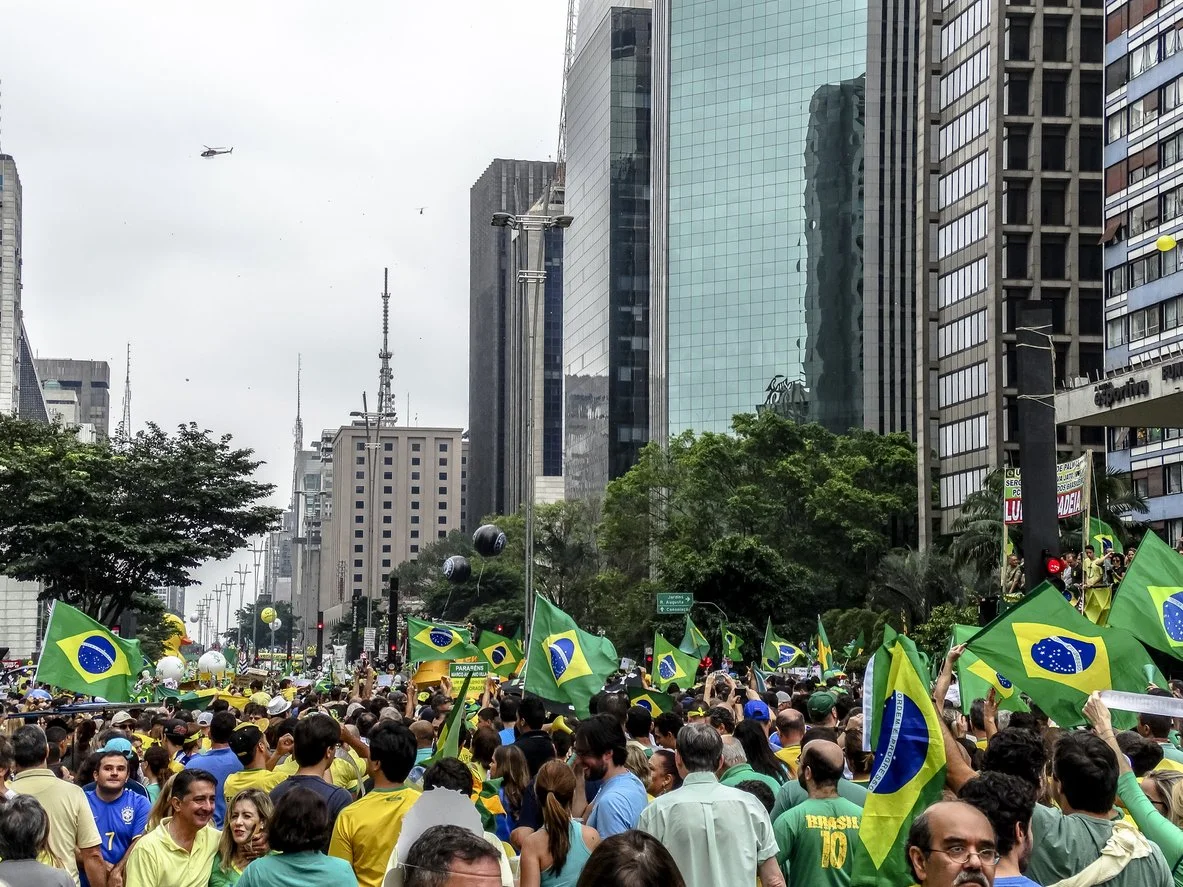
Last week’s surprise re-election of Brazilian President Luiz Inácio Lula da Silva offers hope that the country will continue to serve as a trailblazer in efforts to address the threats to democracy posed by the business models and political actions of Big Tech giants like Facebook.
Since adopting its data protection regulation in 2018, Brazil has proven to be one of the most aggressive countries in the world in regulating the tech corporations. Recent actions include forcing Meta in 2024 to stop using people’s personal data to train its AI models and — earlier this year — fining TikTok for persistent failures in verify the age of users and for illegal use of personal data of teenagers. These abuses also encouraged the country to pass an important law this year to further protect children’s rights in the digital sphere.
The Brazilian competition authority CADE has also been a leading jurisdiction in imposing interim measures to stop abusive conduct while awaiting legal judgment. This year it forced Meta to stop tying its AI agents to its social media services, a decision that was followed by Italy and the EU. In 2020, it forced Meta — then called Facebook — to suspend its acquisition of Brazilian credit card company Cielo over competition concerns.
Many of Brazil’s recent actions were taken in response to problems with the 2022 elections. At that time, supporters of Jair Bolsonaro used Facebook and other platforms to spread disinformation and created deepfakes in the highly polarized campaign against Lula. Then after the election, Bolsonaro supporters used social media to push false allegations of election fraud and attempted to overthrow the newly established government. International and local observers called Meta out for failing to remove content inciting violence. After the election, Meta’s own quasi-independent Oversight Board, charged with supervising Meta’s handling of content moderation across the globe, asked the corporation “to build a measurable framework for evaluating its election integrity efforts” in response to its failures in Brazil’s 2022 elections.
Ahead of this year’s elections, Brazil’s Supreme Court asked all digital platforms to make commitments in the form of compliance plans. Central to this demand was Meta, given that more than 70% of Brazilians rely on that corporation’s Instagram platform as their primary source of news. But once again, both the Big Tech giants and actors linked to Donald Trump directly interfered in Brazil’s electoral debate by using their power to choke down campaigns run by Lula and other progressive candidates, while boosting support for far-right candidate Flavio Bolsonaro.
Meta, for instance, basically replayed its strategy from 2022, and once again allowed foreign interests to purchase political ads while failing to stop AI-generated disinformation ads from flooding the country. This includes those purchased by a U.S. “Stop the Steal”-type account. Once again, the corporation’s algorithms appeared to favor Bolsonaro and at one point, Meta entirely blocked Lula’s Instagram account. Meanwhile, thousands of users reported unjustified bans of their personal accounts and arbitrary removal of legal electoral content.
During both rounds of the campaign, Brazil’s courts and civil society organizations battled Meta over its persistent failure to abide by previous agreements on content moderation rules. Meta denied any coordinated efforts. But a national newspaper uncovered internal communication between Meta employees in which they admitted that restrictions were imposed against Lula’s account. Both the Oversight Board and independent experts at the United Nations called on Meta to provide an explanation and offer remedies. Brazil’s Superior Electoral Court said it would impose daily penalties if it did not apply the same rules to both candidates.
The Lula campaign did prove able to work around some of these illegal behaviors. After Lula failed to win the first round of balloting, his campaign launched a massive WhatsApp campaign designed to inspire his followers to mount a comeback. The highly coordinated digital efforts involved asking followers to share videos, hashtags, and talking points across their personal networks. Named “Lula’s Army,” the WhatsApp channel amassed 10 million subscribers within two weeks.
Given this recent set of experiences, it might seem reasonable to expect the new Lula administration to double down on efforts to protect the country’s sovereignty and make sure powerful digital platforms do not override rules in place.
But his government will likely find it difficult to pass new legislation. For instance, the government has already teed up a new Digital Markets Bill, similar to the European Commission’s Digital Markets Act, and the UK’s Digital Markets, Competition and Consumers Act. But Bolsonaro supporters hold two thirds of the Senate and Chamber of Deputies and are widely considered unlikely to approve the bill in its current form.
The Lula government will remain free to use existing rules more aggressively. For example, Brazil’s antitrust regulator CADE can force tech platforms to change their behavior when there is clear evidence that they have violated the law.
New York Times HIghlights Open Markets Report on AI Bubble
The New York Times highlighted a major report that was published by Open Markets Institute, “Brace for Impact: Protecting People and the Economy When the AI Bubble Bursts.” Coauthored by Open Markets fellow Matthew Scherer, the report breaks down how a handful of tech companies and their financial backers are fueling the AI bubble, outlines vulnerabilities in the financial system that could intensify an AI crash into the next financial crisis, and provides steps that policymakers can take to mitigate the damage and protect everyday people from bearing the costs of a bubble-induced crash. The report also received coverage in Benzinga and Asia Times. The report was co-authored by Americans for Financial Reform. Read the report here and listen to the audio version of the report here.
📝 WHAT WE'VE BEEN UP TO:
Open Markets Institute Europe policy and advocacy lead Giorgos Verdi and Canadian Anti-Monopoly Project executive director Keldon Bester coauthored an op-ed in The Globe and Mail arguing that Canada and the EU should use their emerging tech alliance to reduce dependence on dominant U.S. technology firms. The Trump Administration’s repeated threats to cut off tech platform services to other countries have “supercharged” the search “for alternatives,” they wrote. They called for coordinated competition enforcement, investment in alternative digital infrastructure, stronger procurement and interoperability policies, and joint defenses against economic pressure tied to digital regulation.
Open Markets executive director Barry Lynn took part in a Tech Policy Press podcast to discuss the weak remedies imposed on Google after its two federal antitrust trials. Lynn argued that the judges’ decisions left Google’s underlying power largely intact and called for breaking key chokepoints such as cloud infrastructure, rather than assuming new technologies will automatically create competition. “What we need to be looking at is attacking these deep chokepoints in the system because that’s where all the leverage lies,” he said.
Lynn also spoke at the Economist Magazine’s 2026 Antitrust Summit in New York on competition in the AI Stack and the future of American antitrust. Other speakers included Guillaume Loriot of the European Commission, Christopher Mufarrige of the FTC; Andrea Marván Saltiel of the Mexican Antitrust Commission; former AAGs Abigail Slater, Doha Mekki, and Makin Delrahim; Fiona Scott Morton; and Tim Wu.
The Atlantic quoted OMI food program manager Claire Kelloway commenting on Kitchen Table Project’s proposed public option for food purchasing, which would allow small and midsize national chains to access the same cost savings that only the largest supermarkets currently enjoy. Under such a proposal, Kelloway said, “I think we’d finally see some meaningful competition in many regional markets that currently lack it.”
Courtney Radsch, director of Center for Media and Digital Governance at Open Markets Institute, moderated a panel at All Tech is Human’s Responsible Tech Summit in New York City examining how to turn AI benchmarks and audits into standards that regulators can enforce and the public can trust. New York state Assemblymember Alex Bores also spoke on the panel.
OMI Europe’s policy and advocacy lead Giorgos Verdi spoke at a panel in Dublin, Ireland, on the political economy of AI, organized by the Foundation for European Progressive Studies. In his remarks, Verdi emphasized the role of competition policy in ensuring that AI’s benefits are widely shared and do not end up in the hands of a few oligarchs.
Social Europe published the results of a workshop co-led by OMI Europe fellow Dora Wierzbicka with the help of the European Policy Centre. The workshop found that AI could lead to widespread disruption of the labor market in the medium term and that the EU should have policies in place to prepare.
CMDG at Open Markets Institute issued a statement welcoming the Paris Court of Appeal’s dismissal of Meta’s challenge to the French Competition Authority’s interim measures on publishers’ rights. “Meta and other technology giants have built enormously profitable businesses on content they did not create, while using their market power to undermine publishers’ ability to negotiate fair compensation,” she said, noting the rise of generative AI threatens to make the situation worse.
CMDG at Open Markets Institute called for regulators to halt Meta’s new content rule, which wold allow the social media giant to scrape business accounts for content if they continue using Facebook, Instagram, or WhatsApp. “Meta is exploiting its enormous market power to force publishers into an impossible choice: surrender control over their content or risk losing access to platforms they depend on to reach their audiences,” CMDG@OMI director Radsch said. Meta has since delayed the rollout of the new policy. Nieman Lab and Digiday covered CMDG@OMI’s statement.
🔊 ANTI-MONOPOLY RISING:
A New Mexico court ordered Meta to pay $25 billion in penalties for violating data privacy and preventing harmful information from flourishing on its platform in charges related to the Cambridge Analytica scandal. (CNBC)
The UK’s Competition and Markets Authority (CMA) proposed designating Microsoft as having ‘strategic market status’ in business software under its digital competition regime. Its May 2026 investigation found Microsoft’s position in business software, used by 20 million people per month in the UK, was uncompetitive. (Reuters)
📈 VITAL STAT:
15% to 20%
The increase in hotel prices Expedia Group is accused of causing through contracts that prevented hotels from offering lower rates via their own websites. A class-action lawsuit filed last month in the Western District of Washington claims Expedia violated federal antitrust laws through these contracts, forcing customers to pay significantly more even if they weren’t using the booking platform. (New York Times)
📚 WHAT WE'RE READING:
End Times Fascism: And the Fight for the Living World — Authors Astra Taylor and Naomi Klein examine the growing apocalyptic alliance between Big Tech oligarchs, religious fundamentalists, and ethno-nationalists in their new book.