The Corner Newsletter: Europe’s Tech Sovereignty Efforts (September 8th, 2026)
Welcome to The Corner. In this issue, we discuss measures Europe has taken to reduce its dependence on U.S. tech corporations and mitigate the risks of technological coercion by the Trump administration.
Europe Accelerates Tech Sovereignty Effort in Response to U.S. and Big Tech Pressure
Giorgos Verdi
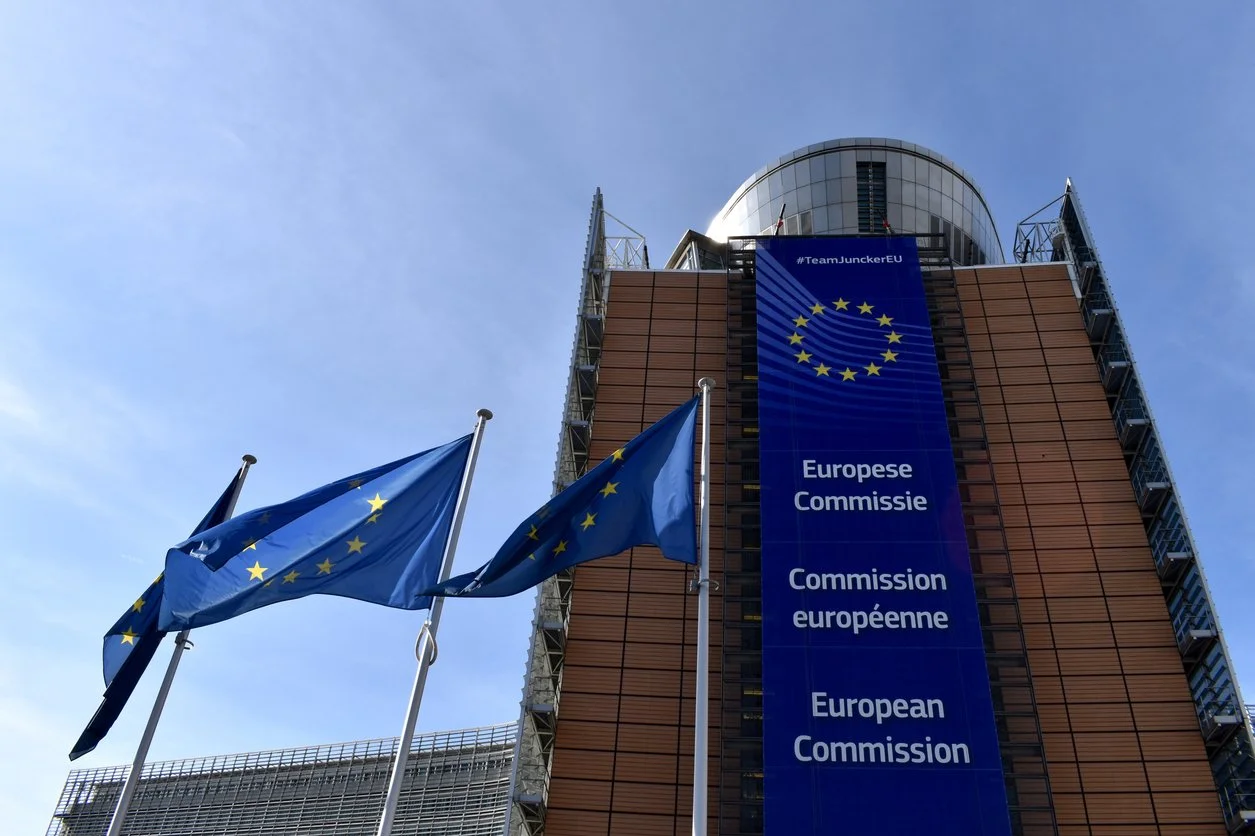
Earlier this summer, the European Commission unveiled a series of measures that aims to mitigate the risks of technological coercion by the U.S. government and American tech corporations. Although none of the provisions put forward are revolutionary, they mark a fundamental change in how the EU thinks of its digital dependencies: not only as a loss of economic value but as potential security vulnerabilities.
For those that have closely followed developments in the transatlantic relationship, the so-called Tech Sovereignty Package did not come as a surprise. Since President Trump returned to the White House in January 2025, he and his administration have waged a hard-edged campaign against Europe’s digital regulations.
Big Tech corporations were quick to support the President’s actions, as they eyed an opportunity to undermine European laws designed to regulate their behavior. Meta’s CEO Mark Zuckerberg set an early tone, framing the EU’s rules as a form of censorship and pledging to work with the White House.
The fight accelerated in April 2025, when the Commission fined Meta and Apple for beaching fair competition rules. These were the first fines under the EU’s Digital Markets Act, and the White House promptly attacked the action as “economic extortion.”
In August 2025, the President escalated his rhetoric. Any country that imposed digital laws and taxes on American firms, he threatened, would be faced with substantially higher tariffs and export controls on U.S. technologies.
Although these attacks did not ultimately result in policy, European policymakers around this same time also began to focus more closely on the idea that that cross-border technology platforms on which Europe depends for defense, commerce, and information could be shut down by a ‘kill-switch’ controlled by the U.S. government.
Individual corporations and the U.S. government had both demonstrated such capacities in the past. In 2022, Elon Musk imposed restrictions on Ukrainian use of Starlink communications services. In early 2025, the Trump Administration forced Microsoft to cut off the chief prosecutor of the International Criminal Court (ICC) from accessing its services.
Brussels developed its Tech Sovereignty Package to alleviate some of these concerns. More specifically, the package included a Cloud and AI Development Act (CADA), a Chips Act 2.0, and an Open Source Strategy. In cloud for example, the package plans to reserve a small portion of sensitive government contracts for European cloud companies. European countries are also encouraged to use open-source solutions when building their AI and cloud stacks.
A few days after announcing the Tech Sovereignty Package, the EU faced an actual cut-off. On June 12, Washington suspended access to Claude Mythos and Fable, Anthropic’s most powerful AI models to date, for all foreign nationals.
In its first weeks, Mythos identified more than 10,000 flaws across major operating systems and web browsers. Mythos’s capabilities sparked concerns inside Anthropic about misuse of the technology, and the corporation established Project Glasswing: a 40-company consortium that included Amazon, Google, NVIDIA, and CrowdStrike, among others.
But Glasswing left EU governments out. The European Commission confirmed limited contact with Anthropic and no access to Mythos. The exclusion caused frustration and concern. In a closed-door meeting, Germany’s top cybersecurity official, Claudia Plattner warned national lawmakers that Chinese companies like Alibaba could soon match Mythos’ capabilities, leaving Europeans vulnerable.
Even though Anthropic soon included ENISA, the EU’s cybersecurity agency in Glasswing, within days, the U.S. government’s export controls to Mythos followed. By the end of the month, however, the U.S. Commerce Department had reversed course, dropping the restrictions on Mythos and Fable.
The Trump administration reversed its cut-off of Mythos to European users within weeks. But the damage had already been done, as the action demonstrated that the U.S. was willing to cut off Europeans based on national security claims as well as over regulatory philosophy.
In the near term, Europe will remain exposed and vulnerable to export restrictions of American technologies. But in the long term, these incidents have clearly helped to galvanize European embrace of policies to promote much greater technological sovereignty. The real test comes in the next months, as policymakers from the European Parliament and the Council will give shape to the final form of the Tech Sovereignty Package.
Open Markets Files Amicus Briefs in Appeals Involving Amgen and Kroger/Albertsons
Open Markets Institute filed an amicus brief with the U.S. Court of Appeals for the Tenth Circuit calling for a reversal of a lower court ruling that shielded an alleged no-hire agreement between Kroger and Albertsons from antitrust liability. The brief argues that competing employers should not be allowed to collude to limit workers’ job options during a strike. “Workers depend on competition among employers for better wages, benefits, and working conditions,” said Tara Pincock, OMI policy counsel. Read the brief here.
Open Markets Institute also filed an amicus brief urging the U.S. Court of Appeals for the Fourth Circuit to allow an antitrust lawsuit challenging pharma giant Amgen’s alleged use of acquired patent rights to extend its monopoly over Enbrel, used to treat rheumatoid arthritis, and block lower-cost biosimilar competition until 2029. The brief argues that patent acquisitions can violate antitrust law when dominant firms use them to shut out rivals and keep drug prices high. Read the full brief here.
Open Markets Europe to Cohost Conference, “Monopoly or Liberty?” in Paris on Sept 25
Open Markets Institute Europe will cohost a conference, “Monopoly or Liberty? How Monopoly Power Threatens France’s Democracy and Sovereignty and What to Do About It” in Paris on Friday, Sept 25, examining how concentrated corporate power and Big Tech is reshaping France and Europe — and what can be done about it. Leading regulators, political figures, economists, researchers and civil society leaders from France and across Europe will discuss the practical policies and political strategies that could distribute power more broadly. RSVP to the event here.
📝 WHAT WE'VE BEEN UP TO:
Courtney Radsch, director of the Center for Media and Digital Governance at Open Markets Institute, argued in Tech Policy Press that recent rulings against Meta and other major platforms mark a turning point in efforts to hold social media corporations accountable for harmful design choices that damage teen mental health. Describing a New Mexico ruling that ordered Meta to pay more than half a billion dollars and adopt new safety measures, Radsch wrote, “Judges and juries are beginning to push back, denying platforms the right to hide behind Section 230, the statute that has provided safe harbor against liability for their design choices.”
Open Markets food program manager Claire Kelloway and OMI legal director Sandeep Vaheesan coauthored a piece in Dissent arguing that America’s affordability crisis is driven by corporate pricing power, not overpaid workers. “Attacks on workers undermine the purchasing power of some families and ignore the root cause of rising prices and stagnant wages,” they wrote. “For many essentials, corporations’ relentless pursuit of short-term profits conflicts with the public interest and makes life unaffordable.”
Open Markets’s Vaheesan warns in Project Syndicate that the AI data-center boom is driving a new wave of utility consolidation and Wall Street investment in the power sector. He argues that this new emerging “power trust” threatens to raise electricity rates, weaken public accountability, and give already powerful utilities even greater control over essential energy infrastructure.
Open Markets Institute condemned Judge Leonie Brinkema’s decision in U.S. v. Google not to order the breakup of Google’s AdX ad exchange, despite the court’s earlier finding that Google illegally monopolized America’s online advertising business. “[Judge] Brinkema today rejected the only logical action to address the threat, which is to break up the corporation along easily identifiable lines,” OMI executive director Barry Lynn said. “Google will remain largely free to pose an increasingly absolute threat to the core foundations of democracy – freedom of speech, freedom of thought and spirit, and freedom of the press.” The American Prospect covered Lynn’s statement.
OMI Europe director Max von Thun was quoted in Politico on how Judge Brinkema’s decision not to pursue a breakup of Google stymies Europe’s efforts to impose a structural separation. “It’s obvious that the European Commission has been holding out for a decision in the parallel U.S. case, even if it has the authority to act independently and should have done so long ago,” von Thun said.
CMDG@Open Markets in a comment urged the Federal Trade Commission to withdraw its proposed policy statement on AI accuracy. The comment argues that the agency is attempting to use consumer protection law to undermine state AI safeguards with a proposal that closely mirrors arguments advanced by large technology corporations. The comment received coverage in Fast Company and can be read in full here.
The Guardian quoted Open Markets industrial policy program manager Audrey Stienon on how the private equity model has left many of the businesses that provide essential healthcare in deep financial trouble. “When they go down, either you need to bail them out, or you need to find someone to save them, or else you’re just stuck with fewer options for consumers down the line,” she said. The article also linked to an industry spotlight on private equity Stienon wrote in May.
UnHerd quoted OMI Europe’s policy lead Giorgos Verdi in an article on France and Europe’s dependence on U.S. Big Tech, in which he highlighted concerns that Europe’s push for tech sovereignty must go beyond building more AI infrastructure. “There is a case to be made for more compute capacity that is sovereign and located in Europe,” Verdi was quoted as saying. “At the same time, it’s very important to define, before rushing into the craze of data-center build outs.”
The Cool Down and WHSM-FM quoted OMI food program manager Claire Kelloway on John Deere’s $99 million settlement with the FTC and five state attorneys general that would require the company to make key repair tools, software, and documentation available outside its authorized dealer network. Kelloway noted that the enforceable details in the agreement mark an important step for right-to-repair advocates.
Open Markets endorsed Rep. Pat Ryan’s proposed “Let Kids Play Act,” legislation aimed at pushing private equity out of youth sports as rising costs turn a once community-based activity into a $40 billion industry increasingly shaped by financial extraction. “Private equity firms have shown, again and again, what happens when short-term investors move into community institutions: costs go up, quality and access go down, and families are left paying the price,” the statement read.
New Books Network podcast hosted a discussion with OMI legal director Sandeep Vaheesan on his 2024 book, Democracy in Power: A History of Electrification in the United States, which traces the history of publicly owned power. The book will be out in paperback Sept. 30. Please use the discount code UCPNEW to purchase the book.
🔊 ANTI-MONOPOLY RISING:
Tyson Foods agreed to pay $82.5 million to settle a proposed class-action lawsuit brought by grocers and other businesses that accused it of conspiring to inflate U.S. beef prices by restricting supply. (Reuters)
The Department of Justice has expanded an antitrust investigation into the nation’s meatpacking industry by investigating beef prices at eight of the nation’s largest grocery retailers including Kroger, Publix, Walmart, Albertsons, Aldi, Ahold Delhaize, Costco, and Amazon. The agency requested information to support the DOJ’s investigation into recent increases in the retail price of beef. (Forbes)
Google has agreed to settle a UK lawsuit brought on behalf of app developers for £260 million ($353.21 million) who sold apps on Google’s Play Store in the country. The claimants alleged Google had abused its dominant position to prevent developers from distributing apps by alternative means and by charging an unfair 30% commission. (Reuters)
The European Commission released a study examining horizontal mergers between 1990 and 2024 that found mergers reduced innovation and increased prices. (European Commission)
📈 VITAL STAT:
27%
The market share in the UK’s electricity market that a company resulting from the proposed merger between EON and Ovo Energy would hold, in a deal that is under investigation by the UK’s antitrust regulator. (Bloomberg)
📚 WHAT WE'RE READING:
The Nerd Reich: Silicon Valley Fascism and the War on Democracy: Veteran California journalist Gil Durán contextualizes Silicon Valley’s bent toward authoritarianism not as a recent development but a long-running campaign to replace elected governments with corporate rule. In his book, the author reveals how men like Elon Musk, Marc Andreesen, Peter Thiel, and Balaji Srinivasan, are attempting to build a new world order.