


The Verge's Nick Statt speaks with Open Markets Director of Enforcement Strategy Sally Hubbard about Amazon's deal with Apple to bring direct iPhone sales to its platform for the first time. Hubbard believes the Amazon-Apple deal could be a violation of antitrust laws that deal with anti-competitive conduct like price-fixing and illegal market allocation.
Read More
"Do farmers truly own their tractors if they aren’t allowed to fix them?" writes Open Markets Food & Power reporter Claire Kelloway. "That’s the question posed by the growing Right to Repair campaign." Read her latest piece on the Federal Trade Commission's Right to Repair workshop that brought together small business owners, state lawmakers, trade group representatives, and advocates to explain the different ways manufacturers prevent buyers from fixing their products, and whether or not they are justified.
Read More
Open Markets Institute calls on U.S. anti-monopoly enforcers to block EssilorLuxottica’s nearly $8 billion acquisition of GrandVision. The deal would mean even higher prices for glasses - which are already far too expensive - and would further limit real choice over where Americans can get their eyewear.
Read More
Open Markets makes "Quote of the Week" on the Chronicle of Higher Education highlighting its letter to the Department of Justice calling for the Antitrust Division to block the merger of textbook giants, Cengage and McGraw-Hill. “The textbook industry, once a robust market with a multitude of competing publishers, is now dominated by a handful of giants.”
Read More
The Open Markets Institute led a coalition of public interest groups and academics in demanding the Department of Justice block the proposed merger of Cengage and McGraw Hill.
Read More
Today, the Open Markets Institute calls on the Federal Trade Commission to block the just-announced merger of Mylan and Pfizer’s Upjohn unit, which recently headquartered in China.
Read More
The Open Markets Institute led a coalition of public interest groups and academics in demanding the Department of Justice block the proposed merger of Cengage and McGraw-Hill. If approved, the merger would create the second-largest U.S. provider of textbooks and higher-education materials after Pearson, with $3.16 billion in annual revenue.
Read More
Fast Company reporter Ainsley Harris tells the story of Senator Mark Warner, a former telecom investor and entrepreneur, sounding the alarm on China’s advancement—and Big Tech’s misconduct. She speaks with Open Markets Senior Fellow Matt Stoller as part of the feature, describing Stoller as "another voice agitating for policy makers to address Silicon Valley’s 'concentrations of capital' and perverse incentives."
Read More
Welcome to The Corner. In this issue, we highlight a powerful dissent in the Federal Trade Commission’s settlement with Facebook, discuss why the Trump Administration’s new hospital pricing rule won’t fix American healthcare, and identify three key takeaways from last week's House subcommittee hearing on Amazon, Apple, Facebook, and Google.
Read More
The Open Markets Institute condemns the Department of Justice Antitrust Division for approving T-Mobile's plan to acquire its wireless competitor Sprint.
Read More

POLITICO's Steve Overly writes about Silicon Valley's antitrust troubles in Washington and the confluence of probes America's biggest tech companies are facing. He reports that enforcers "have met with Barry Lynn, executive director of the Open Markets Institute." He also interviews Lynn who argues that strong antitrust action can alter the digital business models that have given rise to issues like disinformation.
Read More
Open Markets Executive Director Barry Lynn is cited by AP reporters Mae Anderson and Tali Arbel about the implications of the T-Mobile/Sprint merger. “Americans across the country will likely pay higher prices for worse service in a wireless market dominated by AT&T, Verizon, and T-Mobile,” said Lynn. “The problem is especially bad for poor and rural customers.”
Read More
Open Markets Director of Enforcement Strategy Sally Hubbard published an op-ed on CNN Business on the Federal Trade Commission’s $5 billion settlement with Facebook and asserts that the company needs a new business model. “Instead of fines, changing destructive business models and anticompetitive practices is the only way to lessen the platforms’ harms,” Hubbard writes. “These fixes fall into four main buckets, spelling out the acronym PAIN: privacy, antitrust, interoperability, and non-discrimination.”
Read More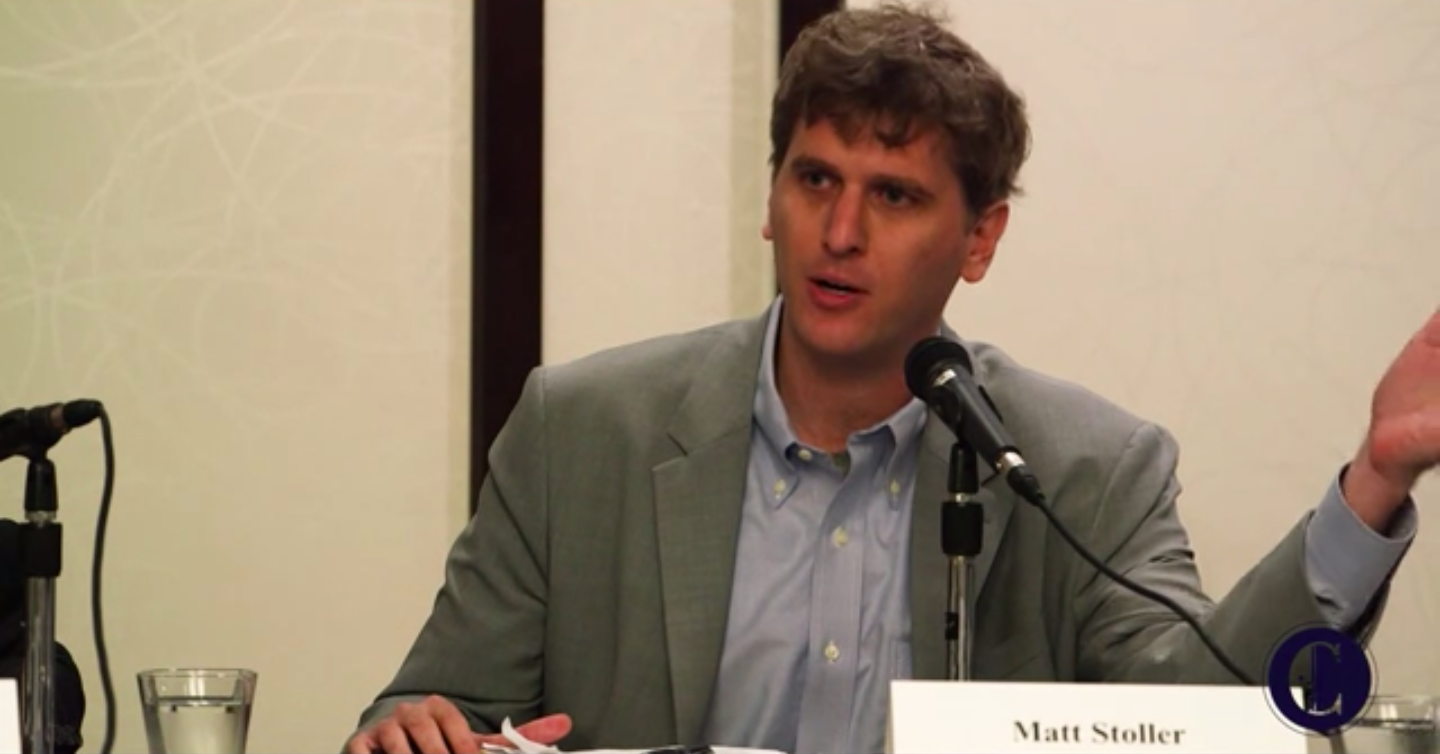
Enforcers and policymakers should pay particular attention to FTC Commissioner Rohit Chopra’s powerful dissenting statement. Chopra condemned the Facebook settlement, writing, “This framework does not protect the public — it protects Facebook” and “ratifies Facebook’s governance structure instead of changing it.”
Read More
Reporters Elizabeth Dwoskin and Tony Romm report on former Facebook co-founder Chris Hughes' campaign to break up Facebook. Hughes has "become one of the company’s biggest problems," they report. They also wrote that lawmakers and regulators have also held meetings with other antitrust experts, according to those leaders, such as Barry Lynn from the Open Markets Institute.
Read More