The American Prospect: Monopoly and its Discontents

Gerald Berk reviews Open Markets Senior Fellow Matt Stoller's new book Goliath: The 100-Year War Between Monopoly Power and Democracy on The American Prospect. He writes that Matt Stoller’s ‘Goliath’ seeks to recover and explain the anti-monopoly tradition of the 20th century, at a time when it is urgently needed in the 21st. "Democrats who seek to revitalize their party would do well to study Matt Stoller’s Goliath and incorporate—in a complex and thoughtful manner—its central teachings," Berk says.

Read More
POLITICO: 'Populist mobs' vs. the Kochs: Tech probes split the GOP

POLITICO's Steve Overly reports that investigations from state attorneys general and federal agencies are causing a rift between free market conservatives and the party's more populist voices. He talks to Open Markets fellow Matt Stoller about the tech industry's waning influence. “People aren't afraid of them anymore" said Stoller. "It’s not that they don’t have power, they do have power. They don't carry the same level of fear."

Read More
Private Equity Chases Ambulances

Open Markets Health Care Researcher and Reporter Olivia Webb writes on The American Prospect about how investment firms have bought up emergency medical service companies, squeezing soaring profits from vulnerable patients. "The Great Recession created an opportunity to financialize the practice of lifesaving emergency transport," she writes. "After 2008, a number of private equity firms moved to take over ambulance and air ambulance providers."

Read More
Sen. Mike Lee Struggles to See Point of Competition, Checks and Balances

At a Senate oversight hearing last month, antitrust subcommittee Chairman Mike Lee, R-Utah, reacted to reports of disagreements between the Federal Trade Commission and the Department of Justice over who would investigate Facebook for antitrust violations. The whole exchange, however, revealed a deep misunderstanding of American’s antimonopoly tradition and political philosophy generally. Read the latest piece from The Corner newsletter.

Read More
The Forgotten History of Small-Scale American Tobacco Farming

In her latest issue of Food & Power, Open Markets Researcher and Reporter Claire Kelloway reports on a lesser-known policy shift around the turn of the millennium helped create our current system of high-stress large-scale contract tobacco farming. She reports that today, corporations dictate many aspects of farmers’ operations through contracts, including what type of plants to grow, how to harvest them, and how much water and chemicals to apply.

Read More
NYT: WeWork C.E.O. Adam Neumann Steps Down Under Pressure

The New York Times reports on the troubles facing WeWork C.E.O. Adam Neumann before his recent resignation. Reporters asked Open Markets Senior Fellow Matt Stoller for comment. “Investors saw through Lyft, and they saw through Uber as well,” Matt Stoller told the NYT. “This one has simply been rejected. Investors are saying, ‘We’re not going to tolerate this nonsense anymore.’”

Read More
Unleash the Existing Anti-Monopoly Arsenal

Open Markets Legal Director Sandeep Vaheesan argues on The American Prospect that corporate power can be neutralized if federal agencies simply used the prodigious authority they’ve been granted. "The president already has extraordinary authority under decades-old statutes," Vaheesan writes. "The question is will he or she appoint officials—to the Department of Justice (DOJ) Antitrust Division, Federal Trade Commission (FTC), U.S. Department of Agriculture (USDA), and other agencies—determined to tame corporate dominance of our economy and politics."

Read More
GQ Magazine: The Tech Giants Might Promise Innovation, Opportunity And Convenience - But At What Cost?

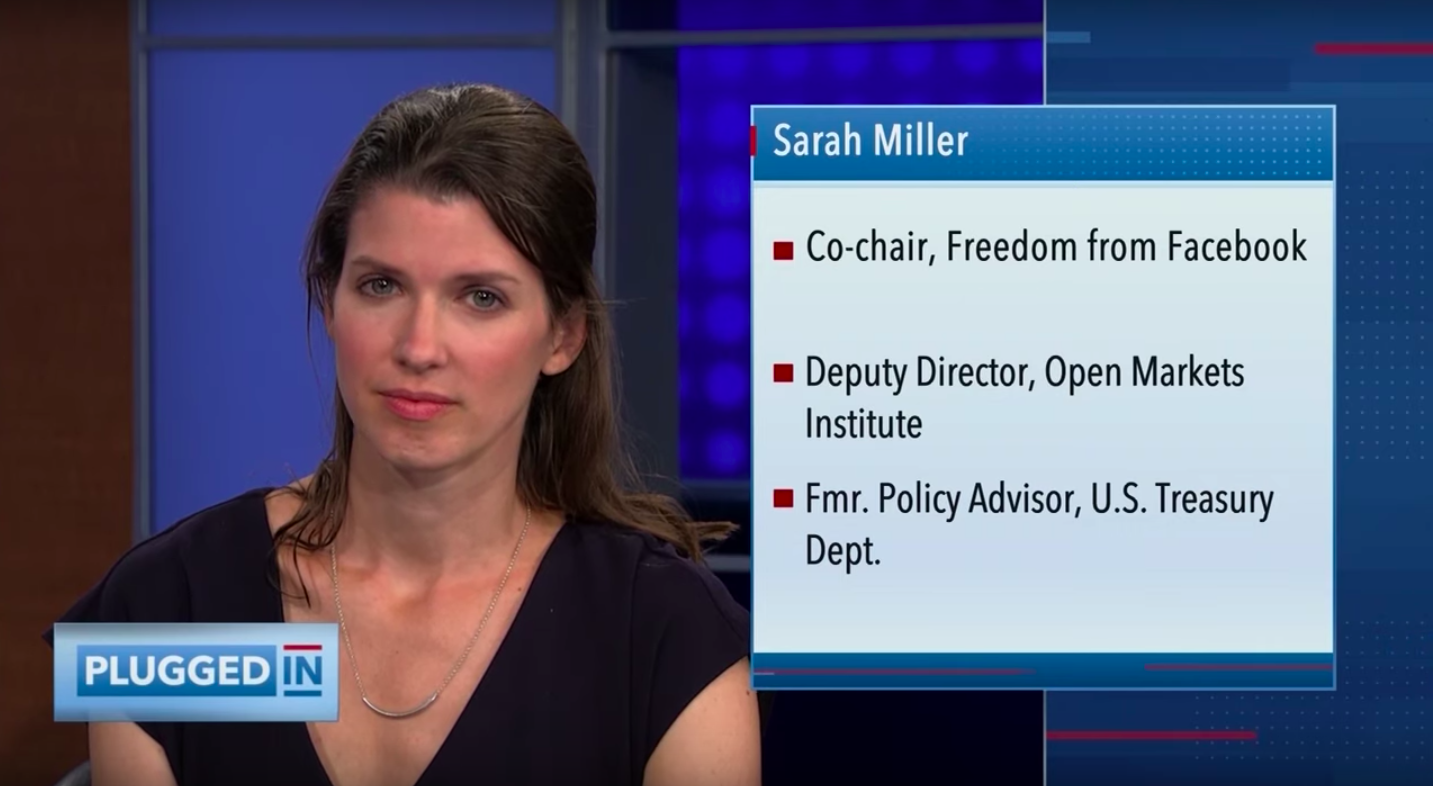
GQ Magazine's Elle Hardy writes that over the past decade, some of Silicon Valley's brightest ideas have evolved into the biggest, most powerful companies on the planet. Sarah Miller, deputy director of the Open Markets Institute, a think tank devoted to curbing big tech’s economic dominance, told her that firms are uniquely equipped to get away with breaching our trust. “Consumers don’t have any power in the way that they would in a functioning market, where if they’re unhappy with the way customers or workers are being treated, they can take their business elsewhere.”

Read More