
Bloomberg Law: Turkey Remains Rare Meat Not Embroiled in Antitrust Probes

Ahead of Thanksgiving, Open Markets' Food & Power reporter Claire Kelloway speaks with Bloomberg law about consolidation among poultry producers and how price fixing is only made easier for them. "Turkey, an $18 billion industry, is one of the lone proteins not subject to any publicly known federal investigation or private suit" reports Bloomberg Law "Even though many top U.S. turkey producers, such as Cargill Inc. and Tyson Foods, allegedly sought to fix prices of other foods.

Read More


A Fair Labor Market for Food-Chain Workers

Open Markets' Sandeep Vaheesan and Claire Kelloway published a piece on The American Prospect on November 21, 2019 calling for a fair labor market for food chain workers. An overwhelmingly disenfranchised immigrant workforce and corporate collusion and concentration define work in food and agriculture today, they assert. Reforming these labor markets is essential.

Read More
Cooperative Enterprise as an Antimonopoly Strategy

Open Markets Institute legal director Sandeep Vaheesan and Nathan Schneider at the University of Colorado published a paper on the Pennsylvania State University Law Review on cooperative enterprise and its place in the antimonopoly tradition. They lay out the advantages of cooperative firms relative to investor-owned corporations and offer ideas on reforming antitrust to protect and promote cooperation.

Read More
Open Markets: DOJ is Empowering Monopolists in the Media and Entertainment Industries

"This decision proves that Assistant Attorney General for Antitrust Makan Delrahim grossly misled the American people when he said he would engage in principle-based enforcement of America's antimonopoly laws, including a tougher opposition to vertical integration by dominant platforms and network monopolies," said Open Markets Executive Director Barry Lynn.

Read More
Open Markets: Google's Abuse of Search Results is a Blatant Betrayal of the Public Interest and a Threat to Democracy.

“The Wall Street Journal has finally confirmed that Google engineers search results to serve its own private interests and those of big advertisers and other giant corporations,” said Open Markets Executive Director Barry Lynn. “It’s way past time for our federal and state governments to fix Google.”

Read More
Data Breaches and the Problem of Bigness

The Wall Street Journal reported that Google plans to start collecting the health data of millions of Americans as part of a cloud-computing deal with Ascension, one of the largest health systems in theUnited States. This comes after Google’s recent announcement that it plans to acquire Fitbit, the maker of fitness-tracking devices, which will give Google access to the personal health data of millions of Fitbit users. Yet, even if Google lives up to its promise not to use health care data for nefarious purposes, a big problem remains, and it should be getting more attention. Google’s growing size alone makes it an ever more tempting target for hackers.

Read More
The Corner Newsletter, November 15, 2019

Welcome to The Corner. In this issue, we discuss why Google’s “Project Nightingale” is a danger not just because Google might use the information, but because of the security risk. We also wrote a letter to the FTC calling on it to block Google’s blockbuster acquisition of wearable tech company Fitbit. And we share two articles on the need for antitrust law to foster beneficial cooperation.

Read More
Open Markets and Eight Other Public Interest Groups Demand FTC Block Google’s Fitbit Acquisition

Ahead of the House Judiciary Committee’s hearing today on the perspectives of the antitrust agencies on tech monopolies, and in light of the news of Google’s undisclosed partnership with one of the largest health care systems in the United States, the Open Markets Institute along with eight other public interest groups are demanding that the Federal Trade Commission block Google’s $2.1 billion acquisition of Fitbit. 

Read More
How Israel’s Antimonopolists Helped Take Down Benjamin Netanyahu

Open Markets Fellow Matt Stoller published a piece on Pro-Market on November 13, 2019 writing that the corruption exposed by Israeli antimonopolists has been a key driver of Benjamin Netanyahu’s current political woes. "If Israelis, in one of the most complex geopolitical situations in the world, can address their oligarchs, then people everywhere can do it too," Stoller writes.

Read More
The Hill: Top antitrust Dem presses DOJ, FTC on Google's Fitbit acquisition

The Hill reports on Rep. David Cicilline (D-R.I.), chairman of the House Judiciary antitrust subcommittee, pressing top officials at the Department of Justice (DOJ) and Federal Trade Commission (FTC) over Google's proposed acquisition of fitness tracking company Fitbit. Cicilline cited a letter by Open Markets and eight other public interest submitted to the FTC calling for the acquisition to be blocked.

Read More
Letter by Open Markets Institute, Center for Digital Democracy, Public Citizen, EPIC, and Others Demanding the Federal Trade Commission Block Google's Fitbit Acquisition

On November 13, 2019, the Open Markets Institute, the Center for Digital Democracy, Public Citizen, EPIC, along with Commercial-Free Childhood, Consumer Federation of America, Oakland Privacy, Media Alliance, and Consumer Action submitted a letter to the Federal Trade Commission demanding to block Google’s $2.1 billion acquisition of Fitbit. 

Read More
WIRED: Google Is Basically Daring the Government to Block Its Fitbit Deal

WIRED's Gilad Edelman writes that Google's moves into health data will test how serious antitrust enforcers are about privacy issues. “These promises about what they’re going to do with data in the context of merger approvals deserve absolutely no weight,” Open Markets Director of Enforcement Strategy Sally Hubbard told WIRED. “Especially when you’re talking about a company that has persistently violated the privacy laws, been repeatedly fined—a persistent recidivist when it comes to privacy violations.”

Read More
Make Antitrust Democratic Again!

Prof. Sanjukta Paul and Sandeep Vaheesan published a piece on The Nation asserting that the response to the next recession should put economic power back in the hands of the people. “Rebuilding antitrust law is an essential element of the progressive economic policy agenda,” the write. “Antitrust should be part of a suite of reforms in the Green New Deal—something that we sorely need, no matter when or how hard the next recession hits.”

Read More
Quartz: Why is it called antitrust?

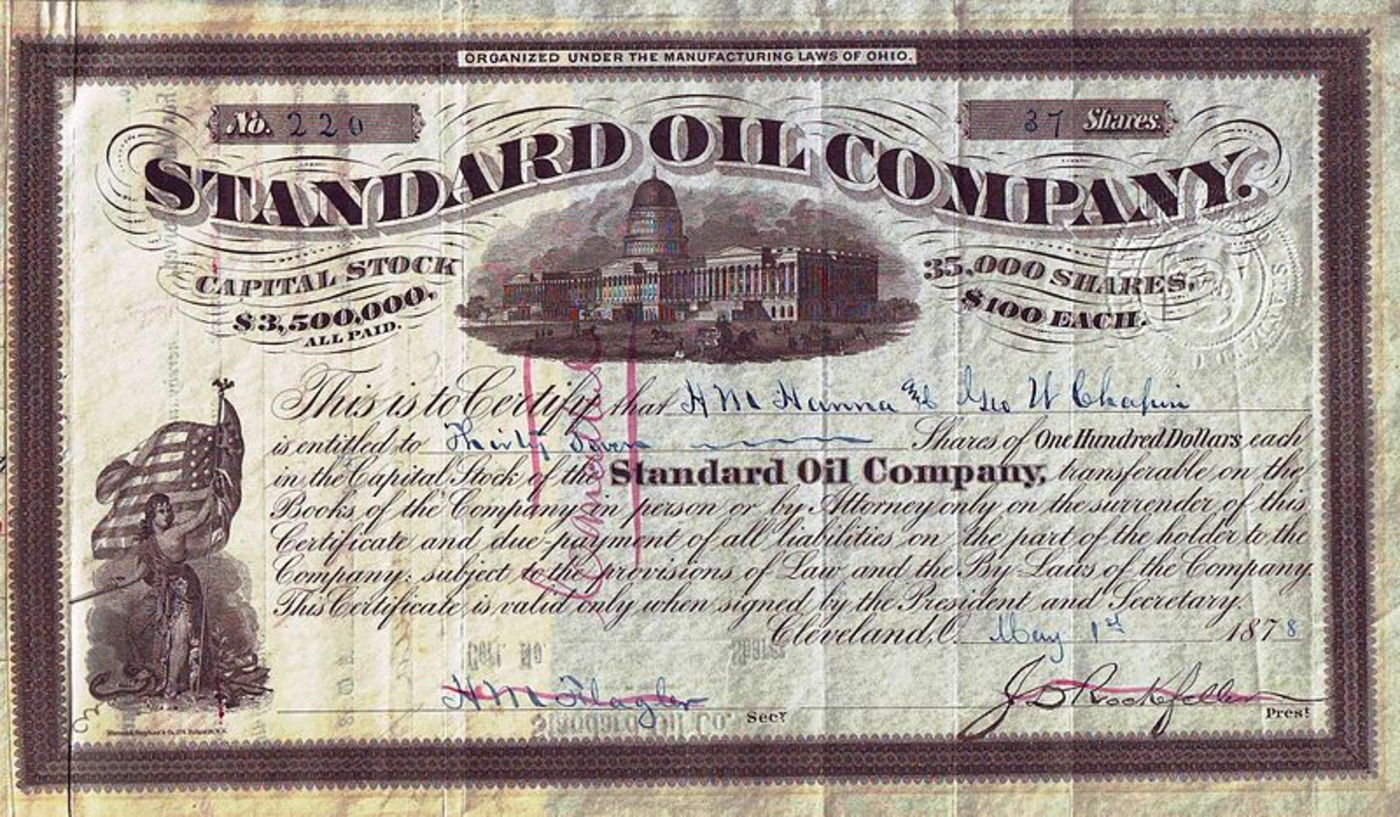
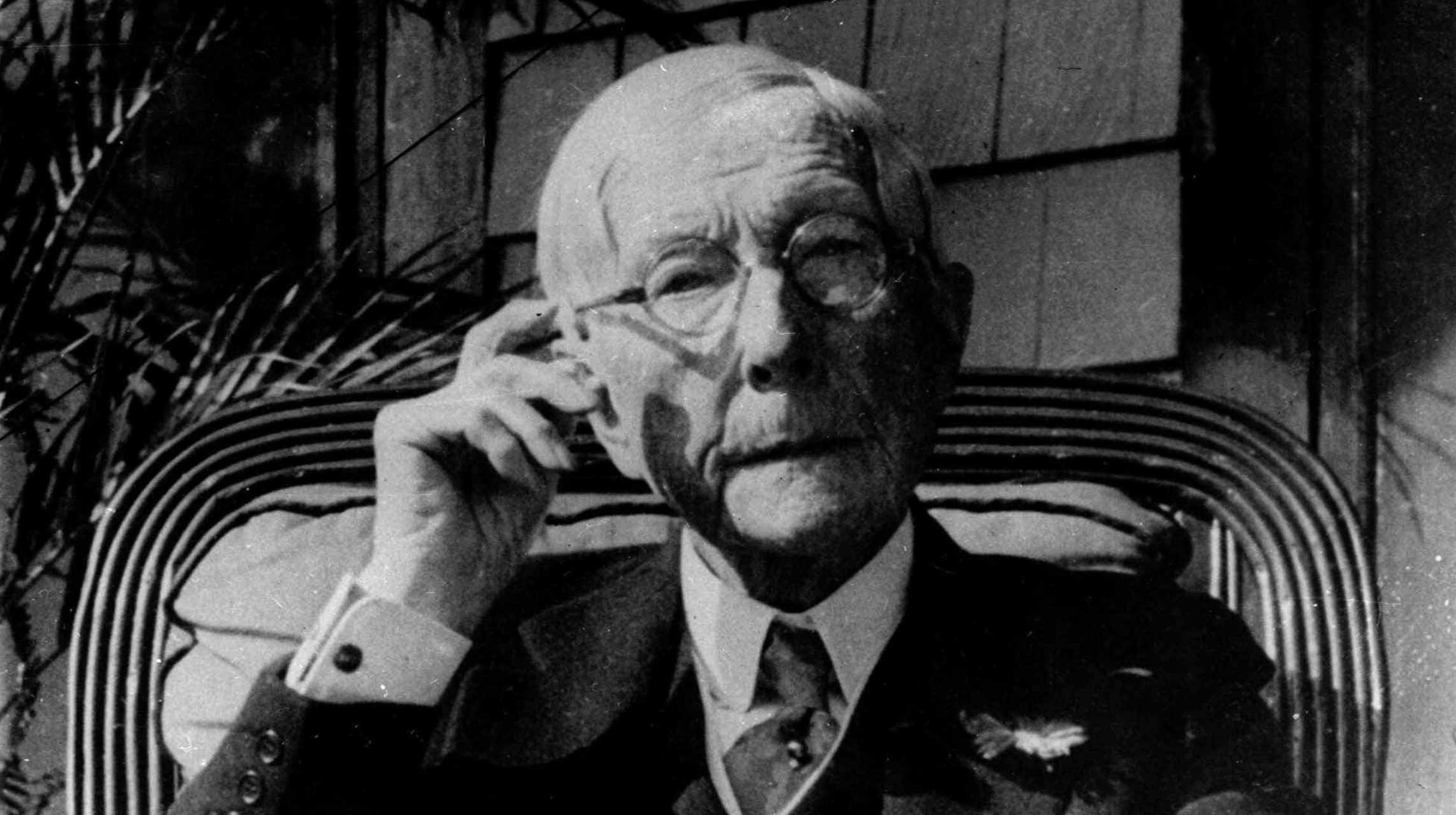
What is antitrust? Quartz's Alison Griswold provides a brief primer on the history of the term antitrust. "Standard Oil is often referred to as the first trust," she writes. "And the legal mechanism Rockefeller pioneered paved the way for an unprecedented period of monopolization in the US." She cites Open Markets Fellow Matt Stoller's new book, Goliath: The 100 Year War Between Monopoly and Democracy.

Read More
Why is it called antitrust?

A “trust” is a group of firms or industries organized to concentrate power, and reduce or eliminate competition. The model developed in the 1880s, as burgeoning oil baron John D. Rockefeller sought to consolidate his holdings across state borders by placing stock from different properties into a single entity known as a trust, Open Markets Institute fellow Matt Stoller explains in his new book, Goliath.

Read More