
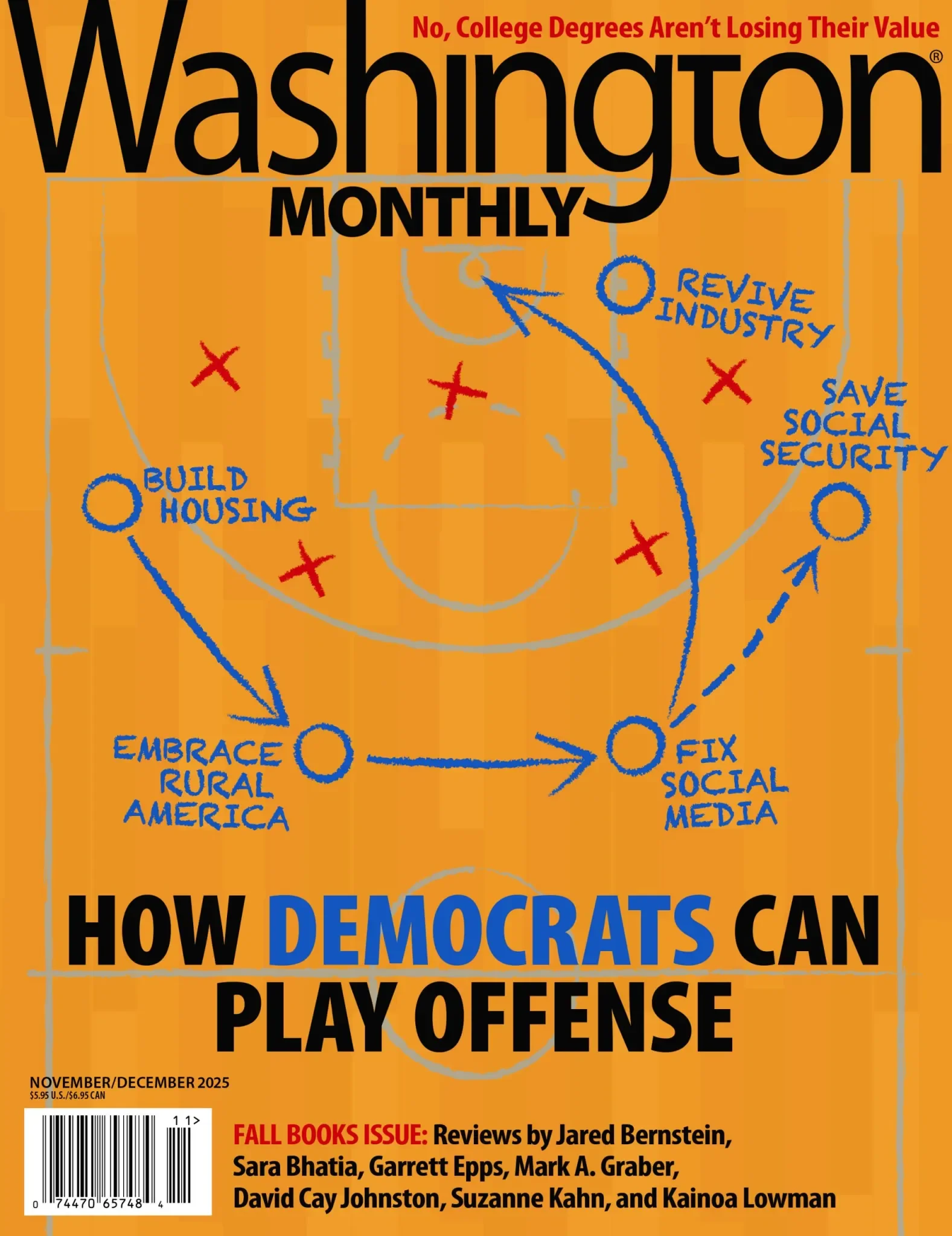
Washington Monthly - How the Democrats Can Play Offense
Policy director Phillip Longman co-authored an article for outlining what’s needed to preserve Social Security, which faces insolvency in less than a decade, and to make the program more equitable for future recipients.
If you think that elections are won by vibes, not vision, the latest issue of the Washington Monthly, out today, is not for you. If you’re of the opinion that resisting the Trump administration’s growing authoritarianism should be the overwhelming focus of liberals’ attention and that policy debates are a sideshow at best, this issue of the magazine will try your patience. If you’re sure that Trump will not allow fair elections in the future, this issue of our publication will seem naive. If you’ve concluded that rural and working-class voters are so lost in the fever swamps of conspiracy and resentment that there is nothing the Democratic Party can reasonably do to win them back, this issue will frustrate you. If you believe that Democrats already have the right policy ideas and just need stronger messaging, or a better messenger, then I can suggest some other media outlets that will better suit your inclinations.
The Washington Monthly was founded on the belief that good policy makes good politics—not in every case or every election, but generally and over the long term. We also believe that the flip side is true: Parties that pursue policies that screw average Americans eventually pay a price. Three days after last November’s election, when many of my liberal friends were still so shell-shocked they could barely get out of bed, I wrote that Donald Trump and his MAGA colleagues would make moves that would “horrify the same public that elected them,” and that “the role of this magazine is to get the American people ready with ideas they can use when the opportunity arises.”
Weeks later we published an entire print issue devoted to “Ten Ideas for the Democratic Party to Help the Working Class, and Itself.” These included having government set prices in the highly consolidated commercial health care market to control soaring costs; providing the growing ranks of the self-employed with portable benefits and relief from monopoly predation; creating a new deal between Washington and universities to make tuition free for moderate-income students; and making ICE raids unnecessary by combining tough restraints on companies that hire undocumented migrants with generous opportunities for those migrants to become legal.
Read full article here.