
The Corner Newsletter: A Bill to Prevent Corrupt Antitrust Settlements & A New Report on Emerging AI Content Licensing Market
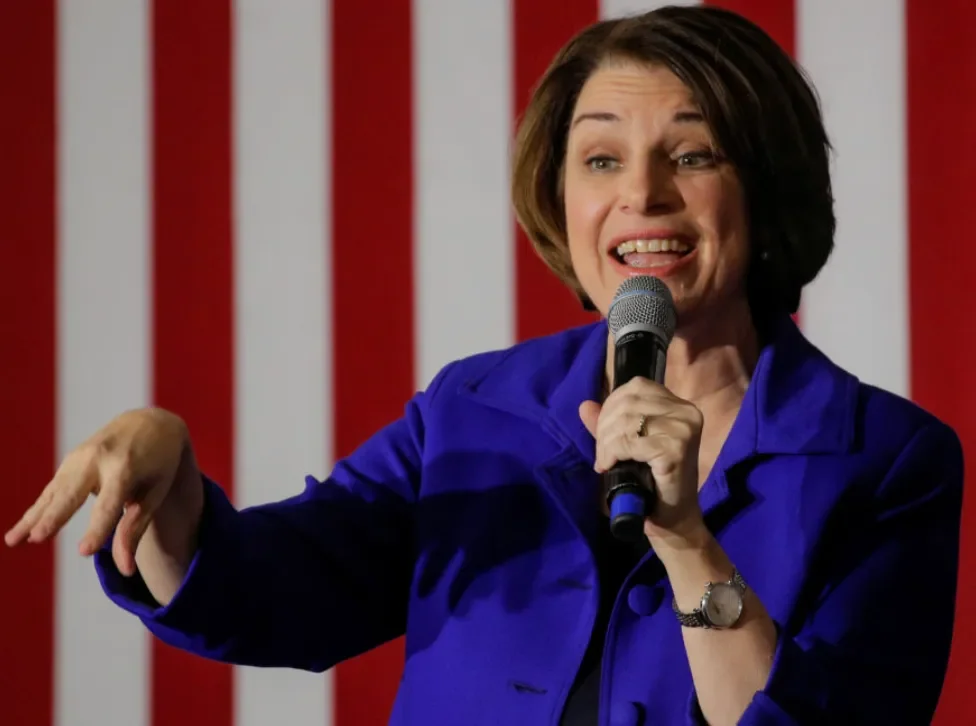
Welcome to The Corner. In this issue, we explore Sen. Klobuchar’s bill to bolster the Tunney Act following a series of weak antitrust settlements that were driven by President Trump’s cozy relationships with corporations.
Klobuchar Moves to Block Trump Antitrust Corruption By Strengthening Tunney Act
Daniel Hanley
Senator Amy Klobuchar introduced legislation in March to strengthen the Tunney Act, a law that mandates judicial review of settlements to protect the public interest. The catalyst for Klobuchar’s proposal was President Trump’s direct intervention in several antitrust settlements that have violated the spirit of the Tunney Act, if not its letter.
The first instance occurred in June 2025, when the Department of Justice (DOJ) settled a merger lawsuit against HPE and Juniper Networks. According to The Capitol Forum, the settlement resulted from heavy lobbying by White House allies. DOJ official Roger Alford, who was allegedly fired for resisting the settlement, warned against the “rule of lobbyists.”
An even more dramatic example came in early March 2026. Against a backdrop of a donation to President Trump’s inauguration and the hiring of pro-Trump lobbyists, the DOJ abruptly abandoned an antitrust lawsuit against Live Nation five days into the trial and instead agreed to a toothless settlement allowing the corporation to maintain its live events monopoly.
The most consequential instance concerned the flurry of backchannel lobbying to rubber-stamp Paramount Pictures’ acquisition of Warner Bros., announced in February 2026. The acquisition will allow David Ellison, the current CEO of Paramount, and his father Larry Ellison, cofounder of the software giant Oracle, to control a corporation that dominates the news, entertainment, and tech platforms. According to a recent lawsuit, President Trump inserted himself into the deal, telling Larry Ellison, “I’ll make sure you get [Warner Bros].” He publicly praised the Ellisons as “big supporters” of his who would make the network CNN “fairer.”
The good news is that state attorneys general (AGs) swiftly stepped into each of these fights to stop the Trump administration’s efforts to sell justice. In the HPE settlement, 13 state AGs, led by Colorado, petitioned the federal judiciary to scrutinize the deal. In the Live Nation case, 34 AGs continued the lawsuit, resulting in a favorable verdict last month that could lead to the corporation’s breakup.
Senator Klobuchar’s bill to strengthen the Tunney Act supports states’ antitrust efforts like these by implementing three main structural safeguards, among other changes.
First, the proposed law aims to correct for a series of court rulings over the last two decades that effectively gutted the Tunney Act, most notably the 2001 D.C. Circuit decision in United States v. Microsoft and a 2007 D.C. District Court decision establishing a standard of extreme deference to federal enforcers’ decisions to settle. Klobuchar’s bill would reverse this legacy by mandating rigorous judicial scrutiny of settlements to ensure the terms genuinely resolve the antitrust violations.
Second, the bill provides additional legal firepower to state law enforcers by allowing state AGs to intervene in judicial review proceedings as a matter of right, rather than having to argue that they be allowed to intervene. This provision would ensure that states can immediately challenge settlements that harm their constituents without needing judicial permission.
Last, the legislation establishes the same procedures for settlements involving the DOJ and Federal Trade Commission (FTC). Historically, the FTC operated with greater independence from the president’s control and therefore did not require the same settlement restrictions as the DOJ. However, the Supreme Court appears likely to side with the Trump administration in Trump v. Slaughter, a case that seeks to strip agencies’ autonomy by allowing the president to fire officials at will. This likely scenario justifies the need for equal settlement restrictions on both agencies. (Open Markets submitted a brief in support of the FTC’s independence.)
The kind of lobbyist-led dealmaking the Trump administration is engaging in has been seen before. Presidents Nixon and Johnson notoriously used antitrust enforcement to punish political enemies and curry political favor with allies. These abuses of power led Congress to enact the Tunney Act in 1974 a few months after Nixon’s resignation.
Johnson, for example, stalled an antitrust review of a bank merger until the newspaper publisher who also ran one of the merging banks reversed an unfavorable editorial position against him. Johnson also intervened to delay an antitrust investigation into aviation tycoon Howard Hughes who donated to a senator poised to provide a crucial vote on Johnson’s Supreme Court nominees.
President Nixon was even more blatant in his efforts to wield antitrust law as a political weapon. In the early 1970s, he threatened antitrust litigation against television networks for their unfavorable coverage of his administration. In 1971, Nixon ordered the DOJ not to appeal a court ruling involving a merger by telecommunications giant International Telephone & Telegraph (ITT) following ITT’s offer to donate $400,000 to his reelection campaign.
Klobuchar’s bill is a critical step toward broader reform measures that can help ensure lasting change. As Open Markets has repeatedly advocated, Congress and administrative agencies should adopt bright-line rules that clearly demarcate when conduct is unlawful, thereby limiting executive and judicial discretion.
CJL@OMI Publishes Report on Flawed Emerging AI Content Licensing Market
The Center for Journalism & Liberty at Open Markets Institute released a major new report, “Same Gatekeepers, New Tollbooths: Mapping the AI Content Licensing Market,” warning that the fledgling AI content market designed to help publishers monetize the value they provide to AI models is already replicating existing structural flaws. Written by CJL@OMI’s Dr. Courtney Radsch and Karina Montoya, the report finds that the current system of copyright claims, ad hoc deals, and voluntary commitments to address the loss of revenue new publishers have experienced as AI models strip their content without remuneration is repeating the same mistakes as the social media and search era. Drawing on more than 35 interviews and consultations with publishers, content creators, and AI licensing startups, the report delivers an actionable agenda for putting AI and content creators on a sustainable footing. “We found major problems with the current licensing market. None are self-correcting. Either we fix this, or we’ll see yet another crisis in journalism and media,” said Dr. Radsch. Read the full report here.
Open Markets Hosted Launch for Chief Economist Callaci’s Book Decrying Franchising Model
The Open Markets Institute hosted a launch party for the release of OMI chief economist Brian Callaci’s groundbreaking book Chains of Command: The Rise and Cruel Reign of the Franchise Economy, which scrutinizes the business model that underpins most fast food chains and many other industries. Published by University of Chicago Press, Callaci’s book delivers the first comprehensive history of how franchising has shaped American capitalism. Callaci’s critique centers on how the franchising business model allows large corporations to dominate small businesses while evading responsibility for caring for either their employees or the entrepreneurs themselves. Franchises employ millions of workers and the industry touches nearly every American community. Yet there is almost no mainstream discussion about how to reform the industry to create a fairer, more equal economy. At the book launch, Callaci discussed his work with former FTC Commissioner Alvaro Bedoya. The American Prospect published a review of Chains of Command in its April issue.
Open Markets Thanks Proton Foundation for Including Us in Annual Fundraiser
The Open Markets Institute, the Center for Journalism and Liberty at OMI, and OMI Europe are deeply grateful for being invited to participate in the most recent Proton Lifetime Charity Fundraiser. The event was organized by the Proton Foundation, the nonprofit governing organization behind the secure email provider Proton Mail, and is designed to support efforts to build a digital economy that strengthens democracy, privacy, and fair competition. The fundraiser brought in more than $1 million for 10 digital rights groups, underscoring the scale and urgency of the threats posed by today’s dominant, surveillance-driven tech models. Importantly, as Open Markets noted in our statement of thanks, Proton’s subscription-based, privacy-first model stands in contrast to platforms that rely on data extraction and behavioral targeting — offering a real-world example that a different kind of internet is possible. Read the full post here: Building a Democratic Digital Future Together.
📝 WHAT WE'VE BEEN UP TO:
The German Economy Ministry’s Competition & Artificial Intelligence Commission cited Open Markets Institute research and recommendations on breaking cloud monopolies in its “AI, Competition & Competitiveness” report. It highlighted Open Markets’ arguments that the EU’s Data Act alone will not solve the continent’s cloud sector issues and listed out OMI recommendations for amendments necessary to make the Digital Markets Act fit for that purpose.
Center for Journalism and Liberty director Courtney Radsch participated in two panels at the International Journalism Festival in Perugia where she discussed the urgent challenges facing media and journalism, including how the shift away from content moderation by Big Tech platforms is undermining trust. She also attended the Transatlantic Consumer Dialogue annual meeting in Brussels, highlighting cross-border collaboration among advocates and policymakers working to strengthen consumer rights and protect democratic information ecosystems.
Open Markets Europe director Max von Thun issued a warning to the European Commission following its first review of the Digital Markets Act (DMA), saying it is failing to seize the full potential of the DMA to address harmful abuses of market power by digital gatekeepers. “Instead of insisting on business as usual, the European Commission must ensure that the DMA is adapted to emerging challenges, including the rise of cloud and AI-driven services,” von Thun said.
Solutionary Rail’s Reconnect America podcast featured Open Markets Institute transportation analyst Arnav Rao in a discussion examining how rail deregulation accelerated by the Staggers Rail Act of 1980 enabled consolidation, weakened public protections, and left the U.S. rail system dominated by unaccountable monopolies shaped by Wall Street incentives.
Open Markets senior legal analyst Daniel Hanley spoke at a symposium hosted by the Denver Law Review entitled “Beyond Profit: Antitrust Regulation, Market Structure, and the Boundaries of Corporate Power,” where he discussed how the antitrust laws have a democratic and not merely economic function by underpinning the conditions necessary for democratic governance.
OMI’s legal director Sandeep Vaheesan spoke on a panel entitled The Missing Piece of the Climate Movement: A Panel on Public Power at D.C. Climate Week. He discussed the importance of critically examining grid governance, in lieu of piecemeal solutions to public problems like unaffordable bills and accelerating climate change.
The Open Markets Institute, joined by a coalition including the Writers Guild of America West and the American Economic Liberties Project, sent a letter to the Federal Trade Commission and Department of Justice urging an investigation into Netflix’s dominance in streaming, citing concerns over pricing power, data control, and the company’s growing leverage over creators and cultural distribution. The letter received coverage in Axios’s media newsletter.
Open Markets condemned the Federal Communications Commission’s politically motivated decision to order Disney, ABC, and their television subsidiaries to file early license renewal applications — a move which comes as the White House once again calls for late-night host Jimmy Kimmel to be fired. “This effort to turn broadcast licenses into loyalty oaths is truly breathtaking hypocrisy from a movement that claimed to champion free speech but is now turning the FCC into a state censorship bureau,” Dr. Courtney Radsch, director of CJL@OMI said.
🔊 ANTI-MONOPOLY RISING:
EU regulators found Meta in breach of the Digital Services Act for failing to prevent children under 13 from accessing Facebook and Instagram, a significant enforcement step that could lead to major fines and signals growing willingness to hold dominant tech platforms accountable for user safety and compliance. (The Guardian)
A federal judge halted the Nexstar–Tegna merger and ordered the companies to remain separate as a case by Democratic state attorneys general makes it way through court. The $6.2 billion deal would give the combined company a 39 percent household share, exceeding the threshhold set by the Federal Communications Commission. (New York Times)
A California superior court filing unsealed last week reveals that the state accused Amazon of price fixing by pressuring major brands like Levi’s and Hanes to ask competing retailers to raise prices on certain products that were also featured on Amazon’s marketplace. Filed in 2022, the lawsuit against the e-commerce giant is scheduled to go to trial next year. (New York Times)
Florida has launched a criminal investigation into OpenAI over whether ChatGPT played a role in a deadly Florida State University shooting, marking a major escalation in efforts to hold AI companies accountable for potential harms tied to the misuse of their systems. (Politico)
Salesforce and its messaging platform Slack have filed an antitrust lawsuit against Microsoft in the UK, alleging that bundling Teams with its Office software unlawfully limits competition and customer choice, marking a renewed legal challenge to Big Tech tying practices in enterprise software markets. (Reuters)
📈 VITAL STAT:
$2 Billion
The amount Meta paid to acquire Singapore-based AI firm Manus in a deal China blocked last week, citing foreign investment and technology export concerns. The move reflects rising geopolitical scrutiny over cross-border tech deals and could deter future collaboration between Chinese startups and foreign investors. (CNBC)
📚 WHAT WE'RE READING:
The AI Paradox: How to Make Sense of a Complex Future: Drawing on her background in AI ethics, author Virginia Dignum takes the reader through eight “paradoxes” of AI, including the idea that the more that AI is able to do, the more it reinforces the need for human creativity, empathy, and moral reasoning.