
Open Markets reporter and senior researcher Claire Kelloway writes in The Washington Monthly about how dairy cooperatives, originally meant to let farmers join forces to get a good price for their milk and stand up to powerful interests, now often squeeze the farmers that ostensibly own them.
Read MoreOpen Markets Institute released a new report revealing how many farmer co-ops have subverted anti-monopoly measures and grown into monopolies that prey upon their members. The report, called “Redeeming the Democratic Promise of Agricultural Cooperatives,” proposes a set of reforms and increased antitrust enforcement that could rebalance agricultural markets to serve the public interest again.

Read MoreThis Open Markets Institute report, “Redeeming the Democratic Promise of Agricultural Cooperatives,” highlights the vulnerability that farmers, as well as the agriculture industry as a whole, have to ever-expanding monopolistic corporations.
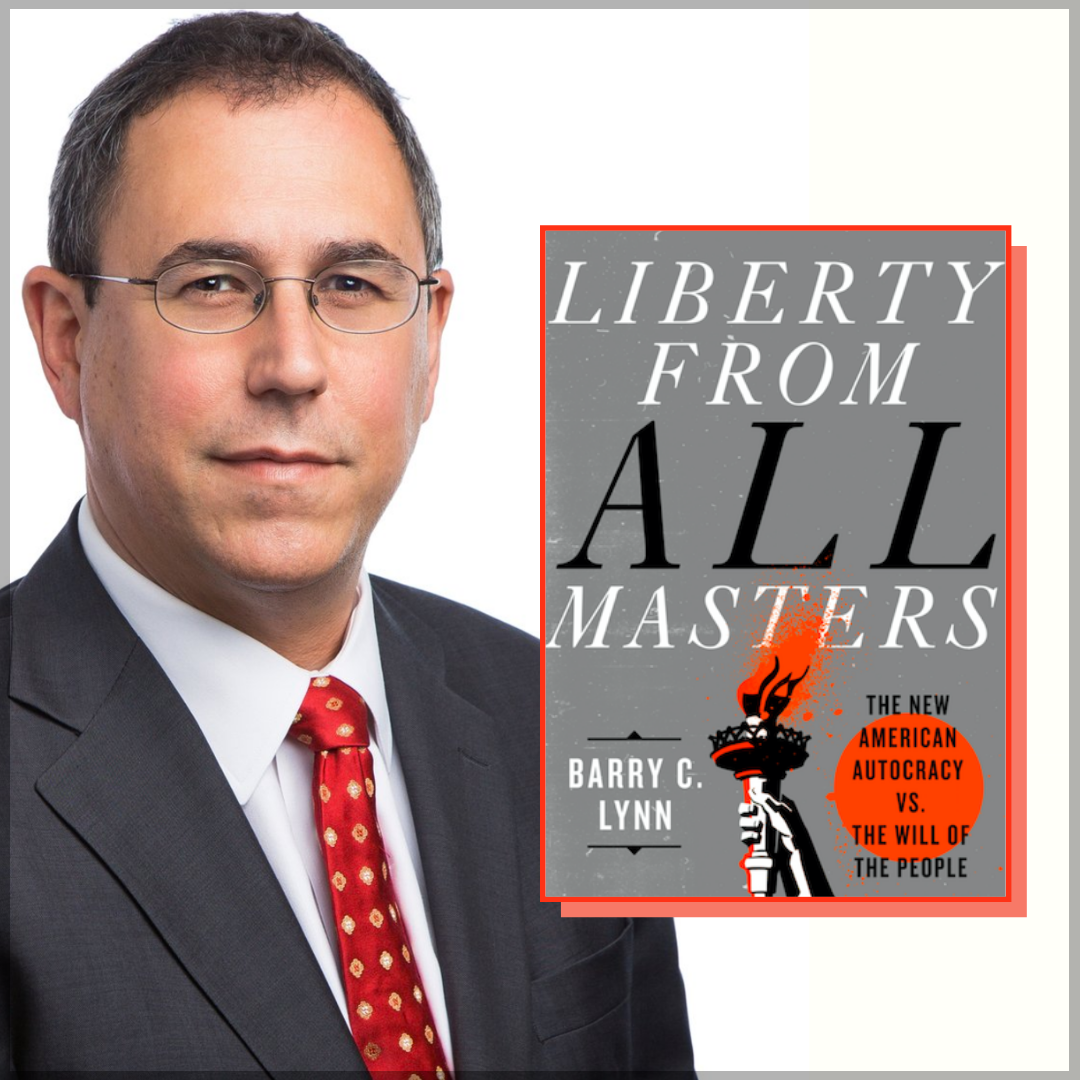
Read MoreBarry C. Lynn’s new book, Liberty from All Masters, officially launched on September 29, 2020 and Lynn did a virtual book tour.
Read MoreWelcome to The Corner. In this issue, we introduce our new report on Amazon, which reveals how the corporation built a surveillance infrastructure to monitor its workers’ every move, and we announce the Oct. 27 publication of Monopolies Suck, the new book by Open Markets Director of Enforcement Sally Hubbard.
Read MoreOpen Markets Institute’s report, “Eyes Everywhere: Amazon's Surveillance Infrastructure and Revitalizing Worker Power,” illustrates the dangers of Amazon’s pervasive worker surveillance and the solutions that can be employed to stop that surveillance.
Read MoreNew report details the dangers of Amazon’s pervasive worker surveillance and proposes solutions that stop surveillance and increase worker power.
Read MoreOpen Markets’ report uncovers true culprit of book shortage: destructive mergers.
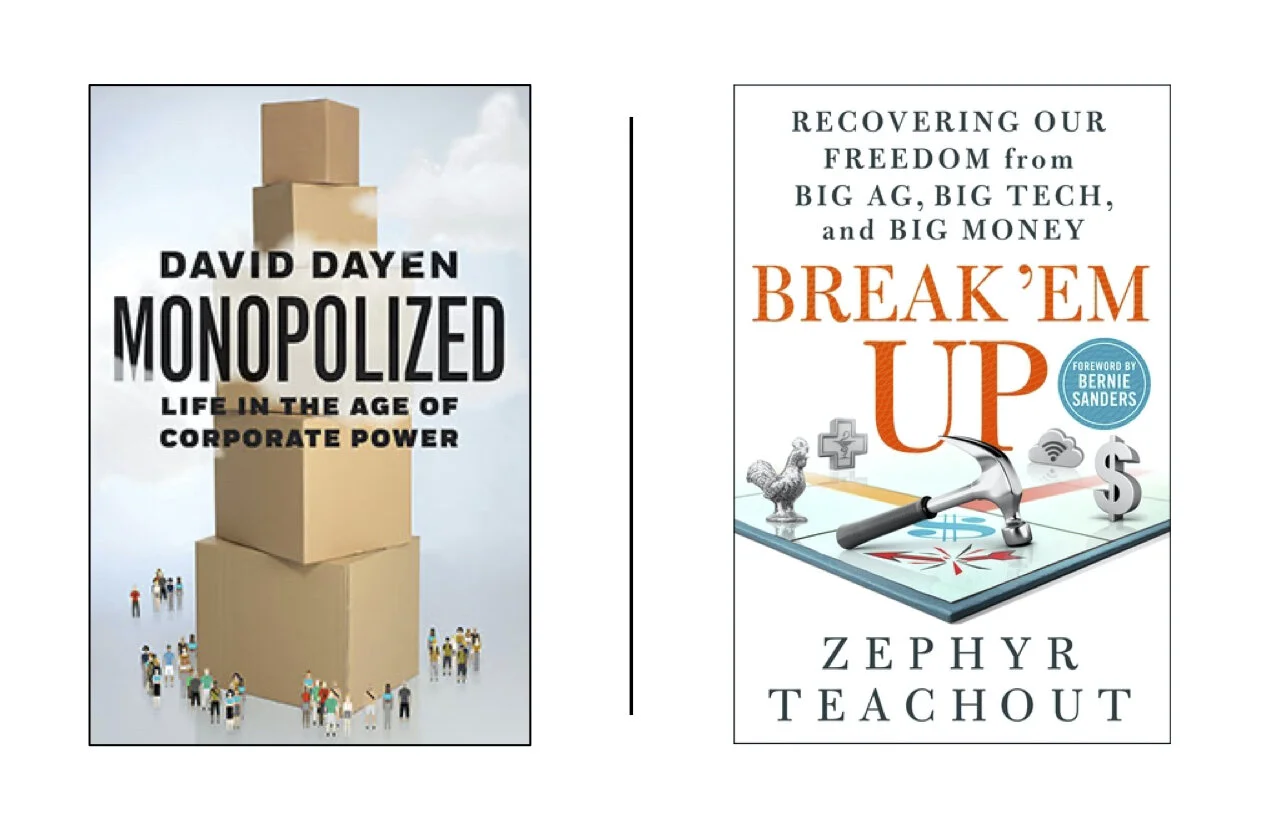
Read MoreOpen Markets Institute Executive Director, Barry Lynn speaks with Zephyr Teachout about her new book "Break 'Em Up" and David Dayen on his new book "Monopolized."
Read MoreWelcome to The Corner. In this issue, we present four important new books that reveal in rich — and alarming — detail how so much of our economic and social lives have fallen under the control of immensely powerful private corporations.
Read MoreGovernment’s failure to prohibit platform monopolists from discriminating exemplified in Amazon’s continued anti-competitive behavior against publishers and authors.
Read MoreOpen Markets Director Barry Lynn examines how companies like Amazon control our lives, profiting mainly from the same model used by the railroads in the 19th century. As one seller put it, “Amazon is the judge, the jury, and the executioner.”
Read MoreOpen Markets Institute releases a statement emphasizing the need to preserve good antitrust doctrine and to protect the public from tying by monopolists.
Read MoreMeatpacking giant JBS recently acquired the Mountain State Rosen (MSR) lamb processing plant in Greeley, Colorado. The plant processed as much as one-fifth of all U.S. lamb and served ranchers from 15 states, but JBS plans to shut it down, leaving ranchers stranded.
Read MorePolitico’s Morning Tech host Alexandra Levine mentions Johnny Ryan will be joining Open Markets Institute as a senior fellow and as a Trans-Atlantic Board advisor for the Center for Journalism & Liberty.
Read MoreFollowing a landmark congressional hearing against big tech companies, Columbia Journalism Review’s Mathew Ingam considers if, and how, competition regulations and antitrust law will adapt to digital networks. Among those interviewed include OMI’s legal director Sandeep Vaheesan. “[The legislative body] has been silent for so long on these questions,” he said. “It felt like a throwback to an earlier time when Congress took its oversight function and matters of market governance seriously.”
Read MoreWelcome to The Corner. In this issue, we present four important new books that reveal in rich — and alarming — detail how so much of our economic and social lives have fallen under the control of immensely powerful private corporations.
Read More