Senior reporter Karina Montoya expresses concern on Amazon’s new ad tech service strengthens its market control, potentially threatening retailer independence and raising concerns about data and margin manipulation.
Read More
Publications
Senior reporter Karina Montoya expresses concern on Amazon’s new ad tech service strengthens its market control, potentially threatening retailer independence and raising concerns about data and margin manipulation.
Read MoreIn their paper, “Rules of the Game: Sports as a Lens for Understanding Fair Competition,” Open Markets policy counsel Tara Pincock and senior legal analyst Daniel Hanley use sports as a framework to refine antitrust law’s notions of fairness.
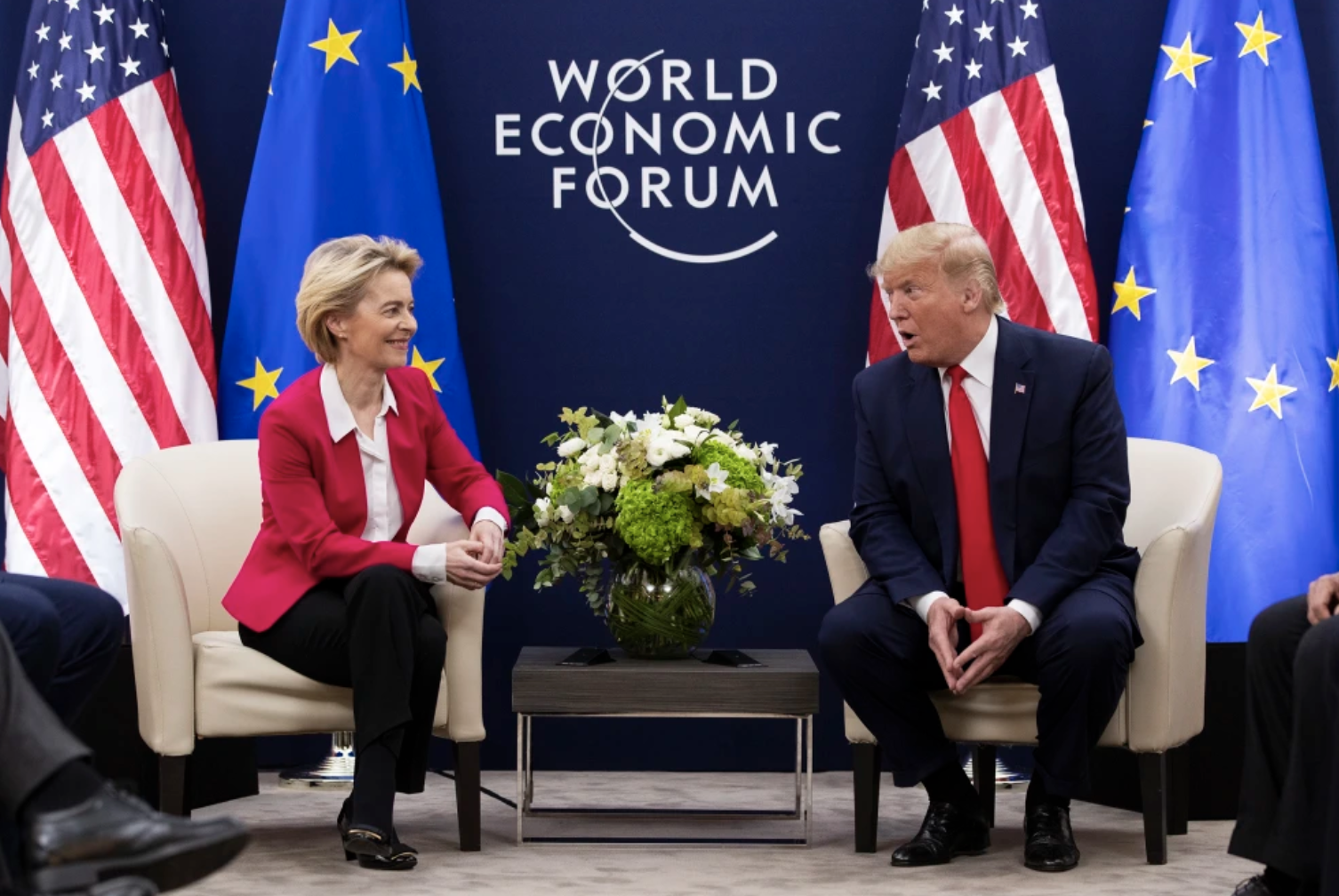
Read MoreIn this issue, we look at efforts by Big Tech and the Trump Administration to disrupt European democracy, and explore Amazon’s latest move to consolidate control over online retail and advertising.
Read MoreOpen Markets Institute’s transportation policy analyst, Arnav Rao, published an op-ed arguing that instead of making grandiose claims about the Panama Canal, President Trump should focused on restoring U.S. shipbuilding as well as adopting a more robust maritime policy to reclaim the seas from China and foreign corporations.
Read MoreSenior EU Fellow Cori Crider expressed how after the AI summit in Paris, Europe must avoid succumbing to Trump's influence and should assert its independence, rejecting appeasement toward the US and Big Tech, which threaten its political and economic sovereignty.
Read MoreOpen Markets transatlantic partnerships director Max von Thun was quoted in an article in the Journal of Political Inquiry regarding the fate of US-EU cooperation over big tech regulation and enforcement under the second Trump administration.
Read MoreOpen Markets signed a letter to the UK government in response to the recent appointment of a former Amazon executive as the new Chair of the Competition and Markets Authority (CMA).
Read MoreEurope director Max von Thun’s thoughts are citd advocating for strengthening the EU’s digital regulations to achieve digital sovereignty.
Read MoreThe Open Markets Institute and its Center for Journalism & Liberty at Open Markets have submitted a detailed letter to the UK’s Competition and Markets Authority (CMA) to support its Strategic Market Status (SMS) investigation into Google’s general search services.
Read MoreCJL director Dr. Courtney C. Radsch warns in a quote that unchecked data control can lead to monopolization and ethical issues in AI development.
Read MoreIn this issue, we discuss how Biden blocked Nippon Steel’s takeover of U.S. Steel. Now the Trump team has to figure out how to save the tottering corporation, and America’s broader steel industry.
Read MoreOpen Markets Executive Director Barry Lynn spoke in late January in Brussels at a conference titled A Perfect Storm: A Time of Truth for Europe, hosted by Cristina Caffarra and The Capitol Forum. Lynn spoke on a panel with Texas Attorney General Ken Paxton and FTC Commissioner Rebecca Slaughter, among others. Other speakers included economist Simon Johnson, who recently won the Nobel Prize, MEP Andreas Schwab, former German Secretary of State for Economic Affairs Sven Giegold, Ambassador Katherine Tai, CFPB Director Rohit Chopra, FT Columnist Rana Foroohar, UK MP Chi Onwurah, MEP Alexandra Geese, and Marietje Schaake.
Read MoreThe Open Markets Institute filed an amicus brief in Cornish-Adebiyi v. Caesars, a case before the Third Circuit court in which casino hotels in Atlantic City used revenue management software from Cendyn Group to fix prices at high rates.
Read MoreEurope director Max von Thun co-wrote a piece alongside fellow Michelle Nie discussing French AI Action Summit must address Big Tech's control over AI infrastructure and policy to ensure AI aligns with the public interest and independent regulation.
Read MoreFood systems program manager Claire Kelloway is quoted advocating for stronger antitrust enforcement and the Packers and Stockyards Act to curb corporate consolidation in the meat industry.
Read MoreSenior legal analyst Daniel Hanley was quoted supporting the ruling, emphasizing that corporations can't use weak First Amendment claims to evade regulation.
Read MoreEurope director Max von Thun argues that the EU should resist US pressure to ease Big Tech regulations and instead strengthen its digital sovereignty for economic and security reasons.
Read More