The Open Markets Institute commended Texas-based worker Ric Davidson, his counsel at Gustafson Gluek, Burns Charest, and Towards Justice for stepping in to defend the Federal Trade Commission’s landmark ban on non-compete clauses—an essential policy to protect workers’ freedom to change jobs and start new businesses.
Read MoreLegal director Sandeep Vaheesan co-authors a piece with Alvero Bedoya, former commissioner at the Federal Trade Commission, and current Senior Adviser at the American Economic Liberties Project, arguing that the Trump administration’s suspension of the FTC’s non-compete ban represents a major setback for American workers, reversing one of the most significant pro-labor reforms in decades and reinforcing corporate control over the labor market.

Read MoreSenior reporter Karina Montoya argues that U.S. courts must take strong structural action—not just behavioral fixes—to dismantle Google’s illegal monopoly over digital advertising. She contends that forcing divestitures of Google’s ad exchange (AdX) and ad server (DFP) is both technically feasible and necessary to restore competition, empower publishers, and prevent Google from continuing to manipulate the ad market through its control of key algorithms and data systems.
Read MoreIn this issue, we recap our 2-day Future of Democracy conference in Brussels and analyze the recently concluded remedies trial for Google’s monopoly over digital advertising.
Read MoreThe Open Markets Institute Europe submitted observations to the European Commission as part of its consultation on the review of the Digital Markets Act (“DMA”).
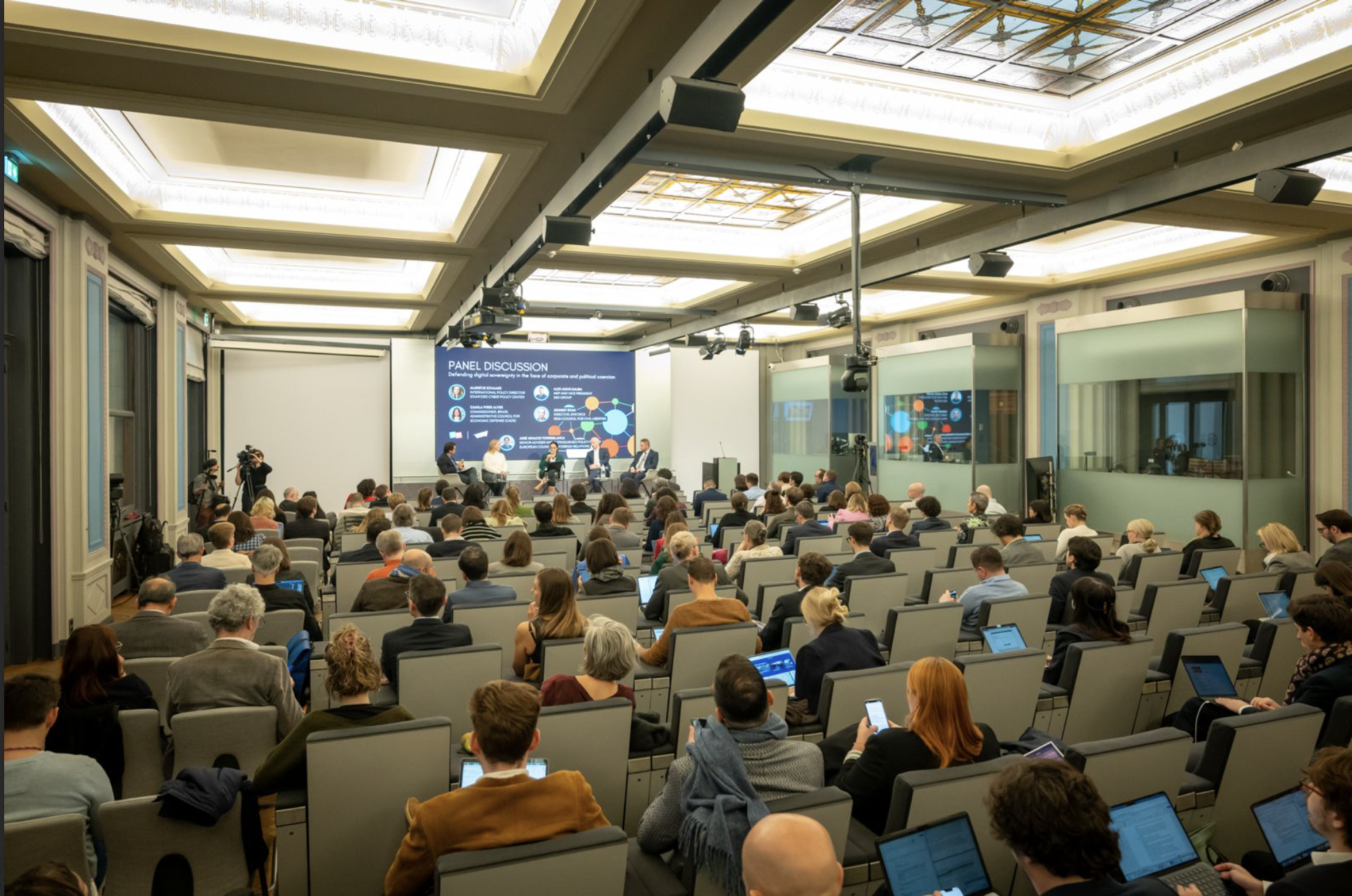
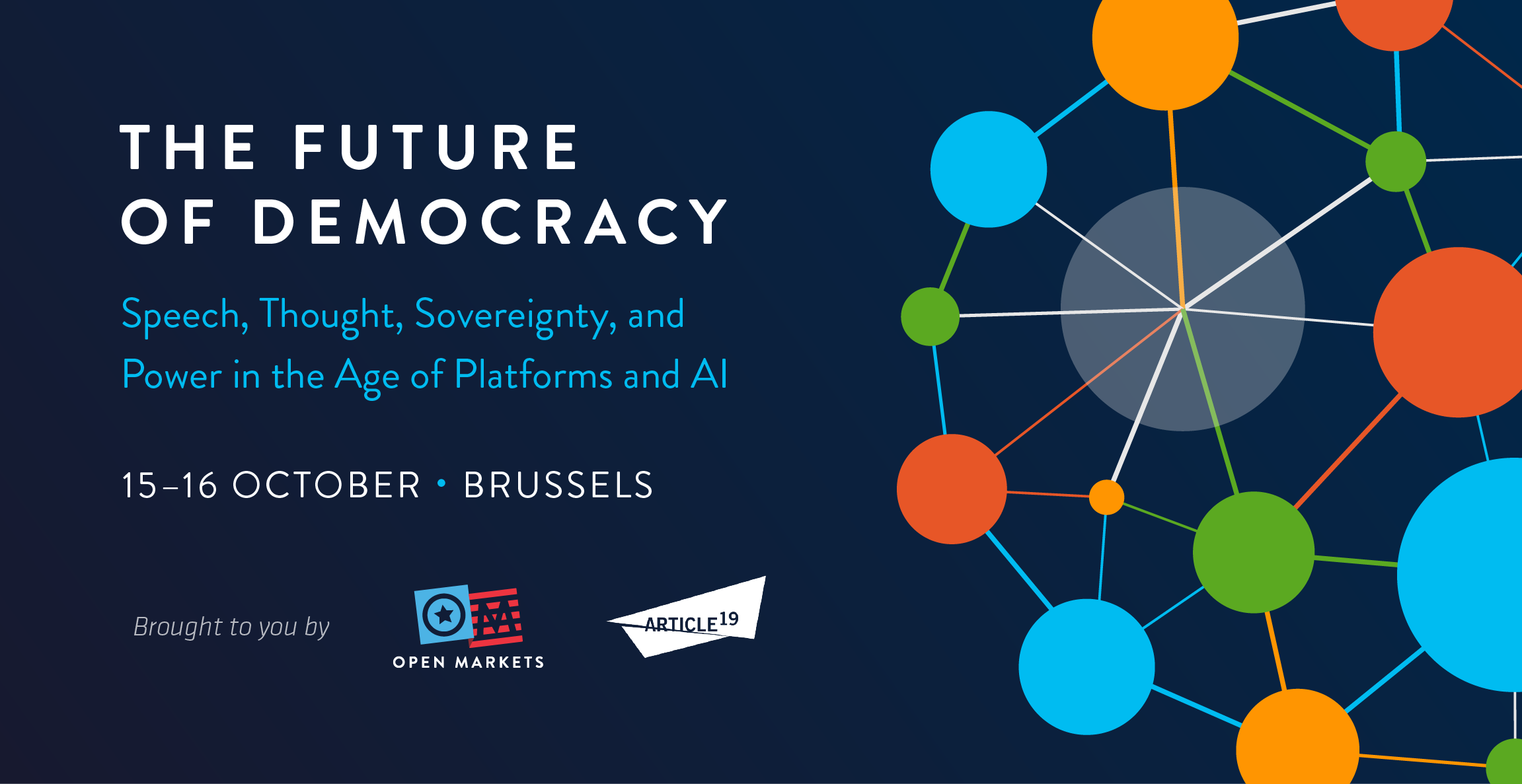
Read MoreThe Open Markets Institute and ARTICLE 19 hosted on October 15th & 16th a convening of high-level leading thinkers, lawmakers, technologists, and advocates who discussed the direct and growing threats to our democracies and basic liberties posed by today’s dominant online communications platforms, the rise of AI, and interference by foreign states.
Read MoreCJL director Dr. Courtney Radsch and Europe director Max von Thun author a brief arguing that dominant U.S. platforms such as Google, Meta and X wield unprecedented power to manipulate political discourse, censor individuals and organizations, and shape the flow of information across Europe, the United States and beyond. At the same time, and in coordination with these corporations, the current U.S. administration has launched an “unprecedented assault” on Europe’s right to regulate these corporations in the public interest.
Read MoreOpen Markets Institute’s transportation analyst Arnav Rao published an article on Trump’s faltering shipbuilding agenda, arguing that the president has “gutted the very offices, funding streams, and foreign partnerships” needed to rebuild U.S.
Read MoreIn this issue, we explore how a new initiative from the Federal Communications Commission will only further consolidate the broadcast media industry.
Read MoreJoin The Open Markets Institute and ARTICLE 19 on October 15th & 16th for a convening of high-level leading thinkers, lawmakers, technologists, and advocates to discuss the direct and growing threats to our democracies and basic liberties posed by today’s dominant online communications platforms, the rise of AI, and interference by foreign states.
Read More